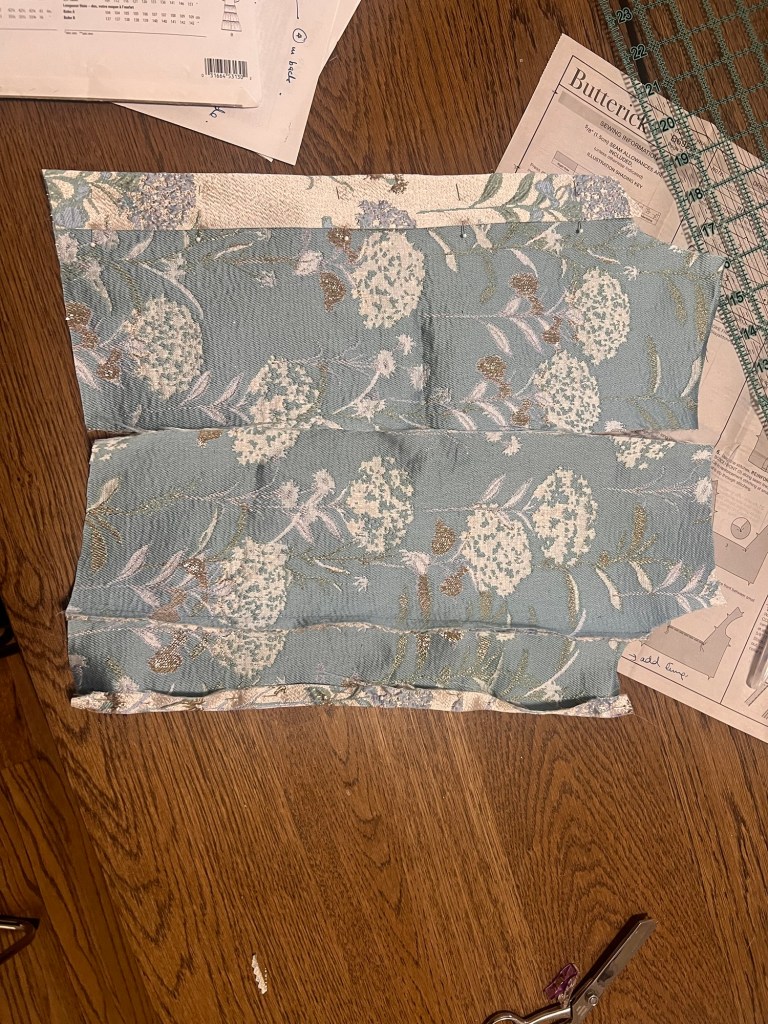
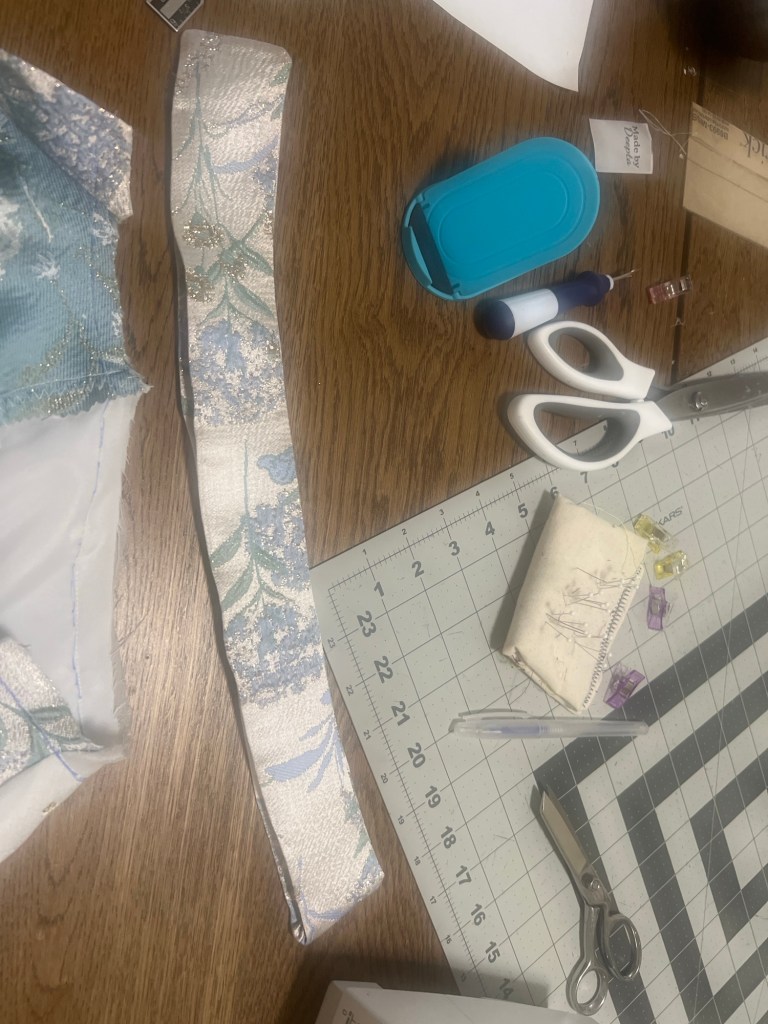
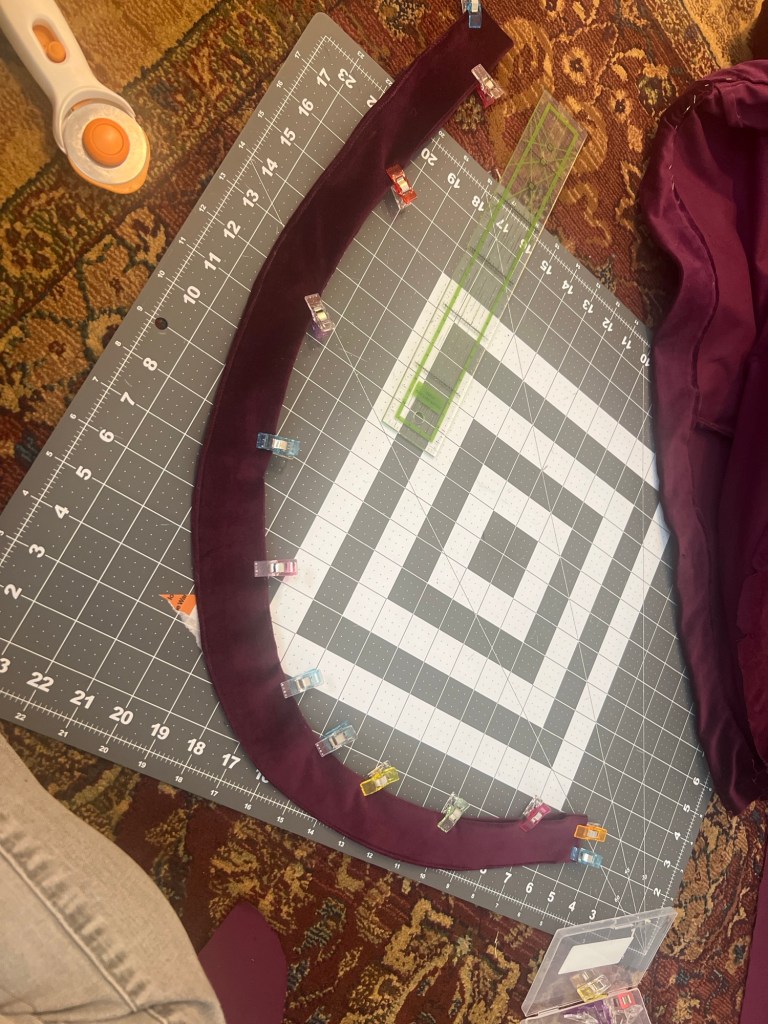
Sew the front bands right side together , iron the band with the seam underneath. Stitch in the ditch and finish your front bands
Stay stitch top and bottom and then sew the bottoms of the bands together
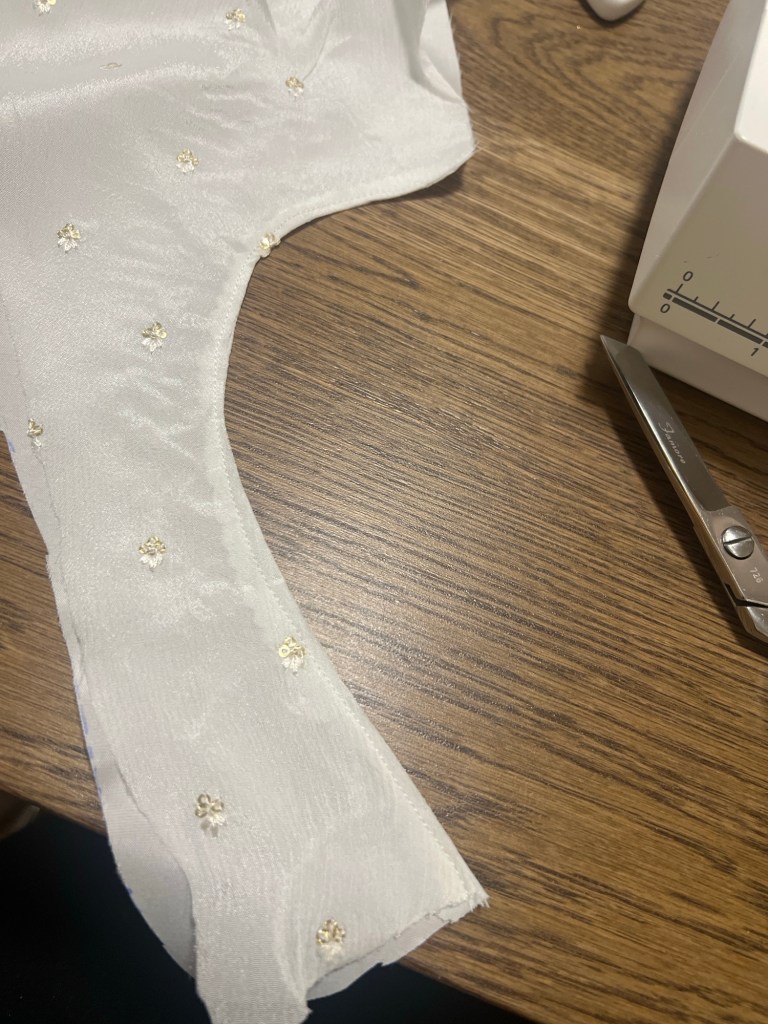
I need a lining so I cut it out to the pattern of my thin fabric – first the armholes -match them exactly with plenty of pins, then flip it over and understitch
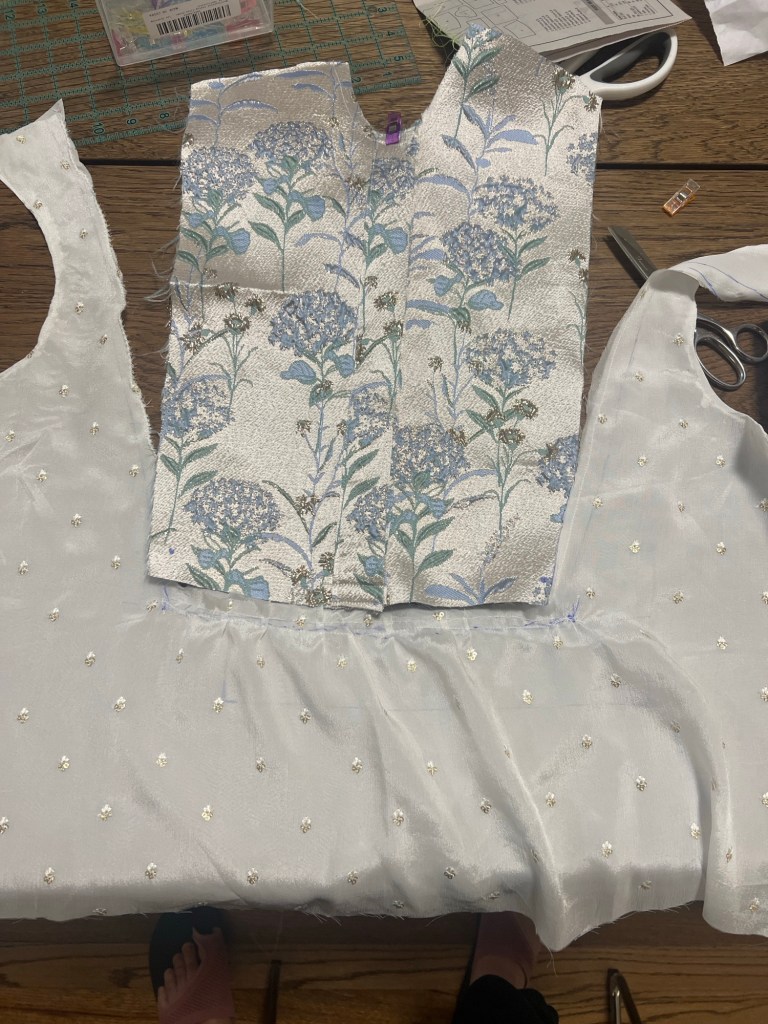
Tack rest of lining to the cloth – get the gathering stitches and tack to the lining and prepare to add yoke in
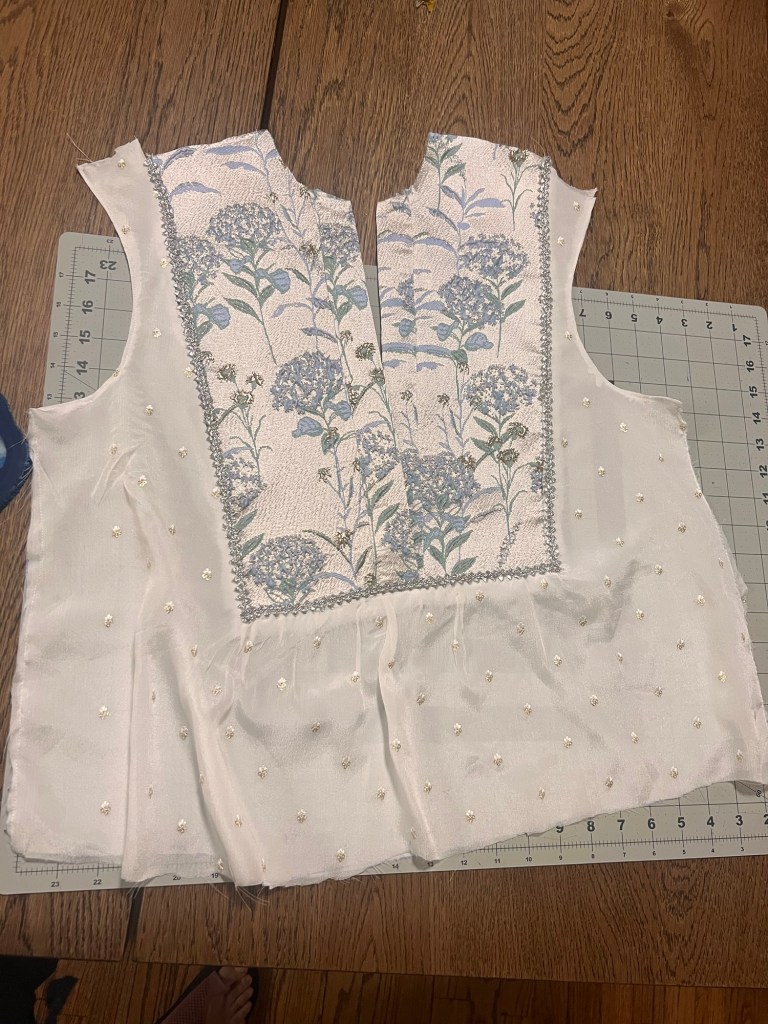
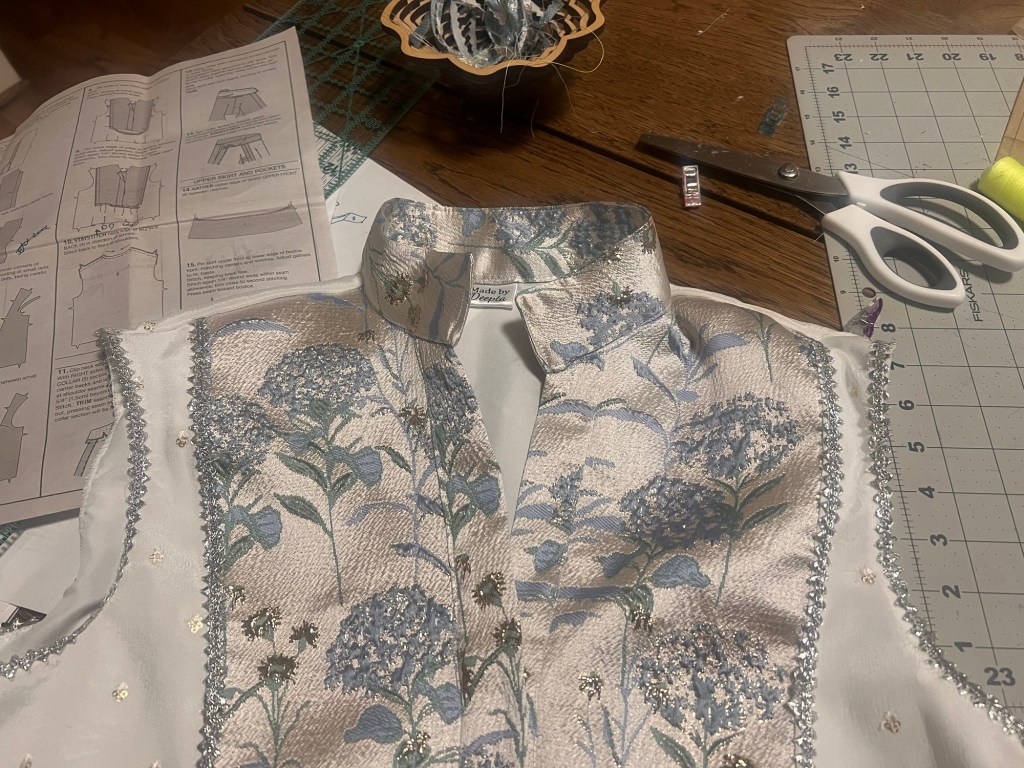
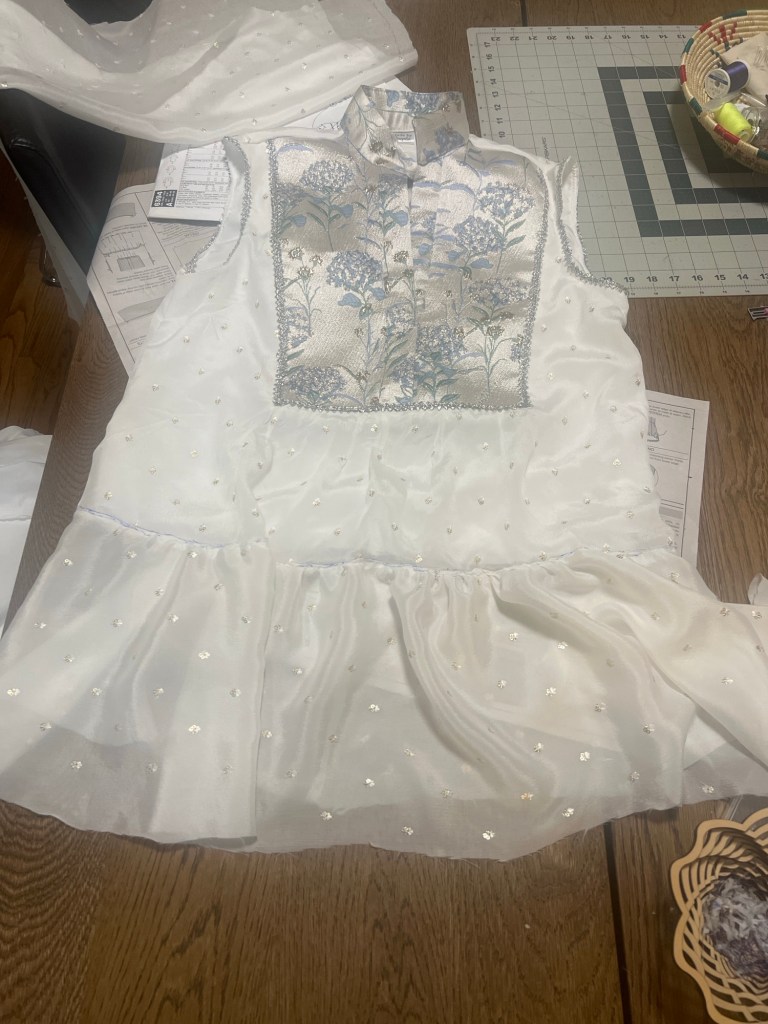
Yoke is in, add some gotapatti lace
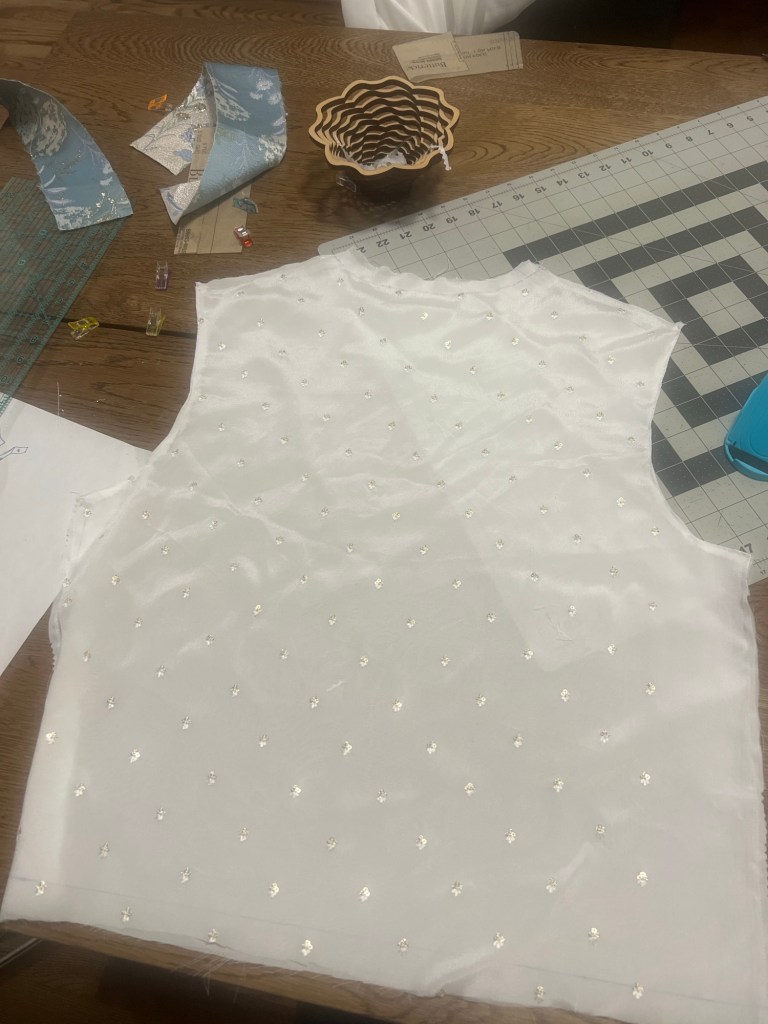
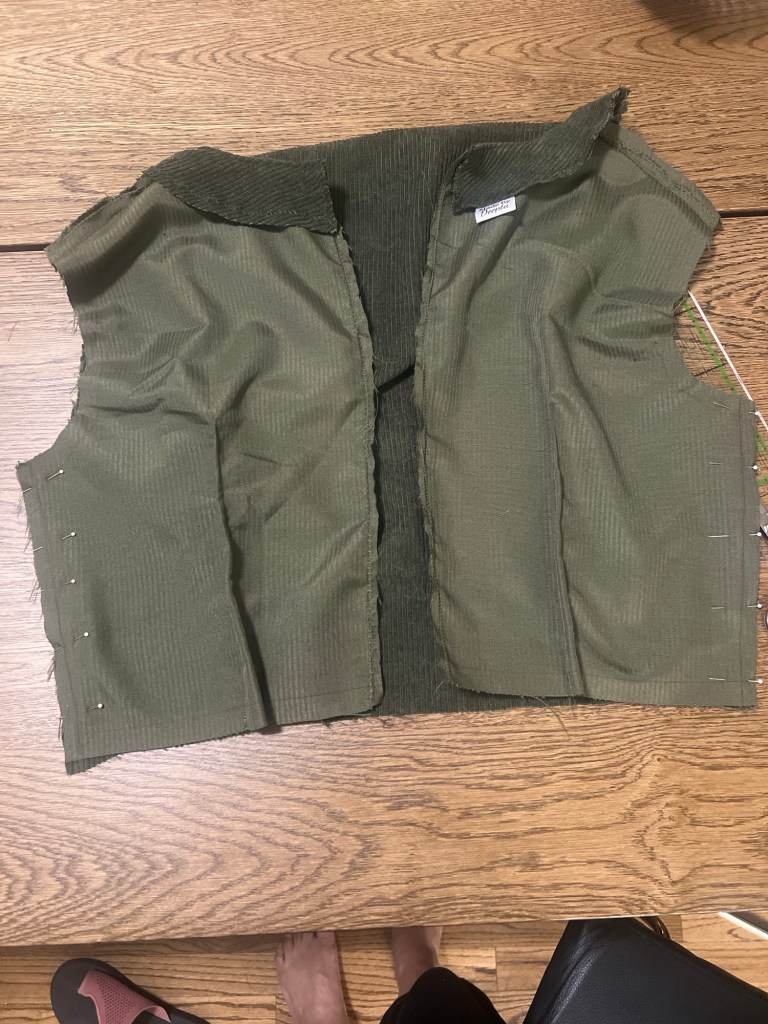
Now add lining to back- finish the arms holes and just tack down the others beyond the hemline
Join the 2 together at the shoulders and sides -leave seam allowances at the bottom- the skirt lining will be more of a slip
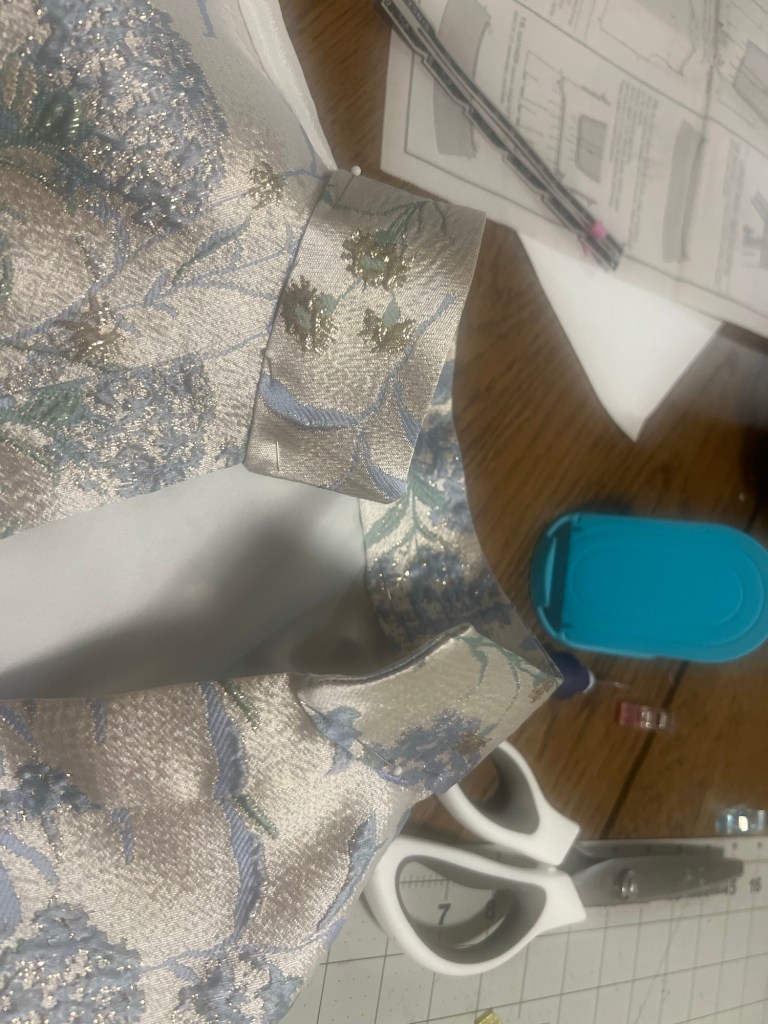
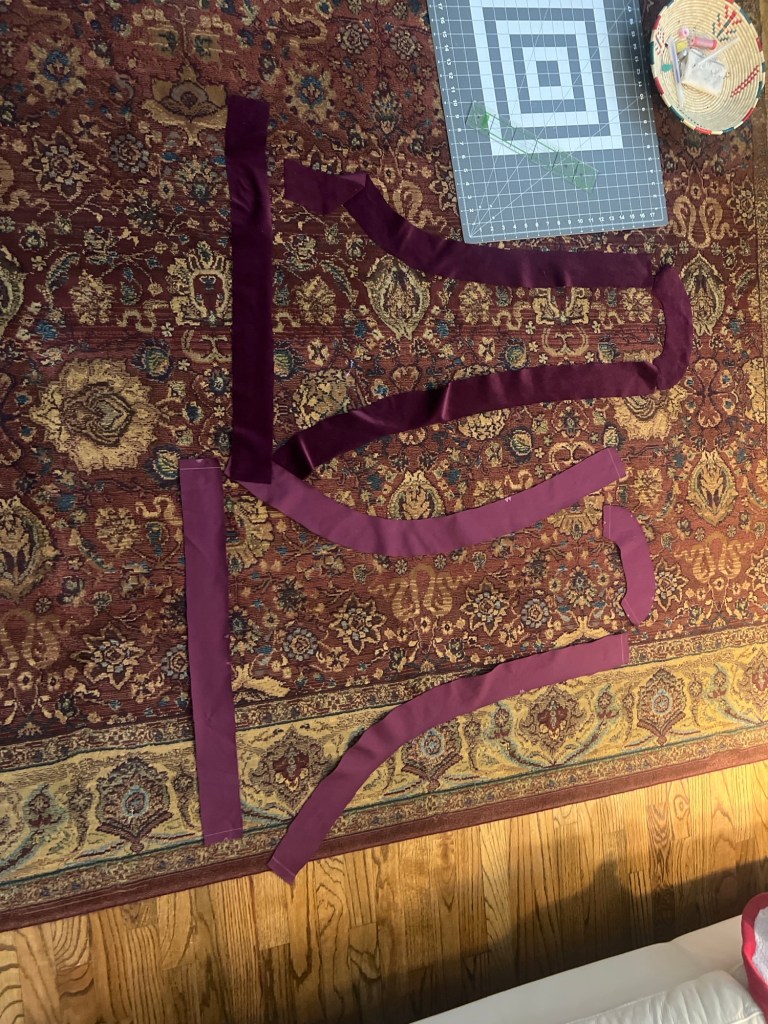
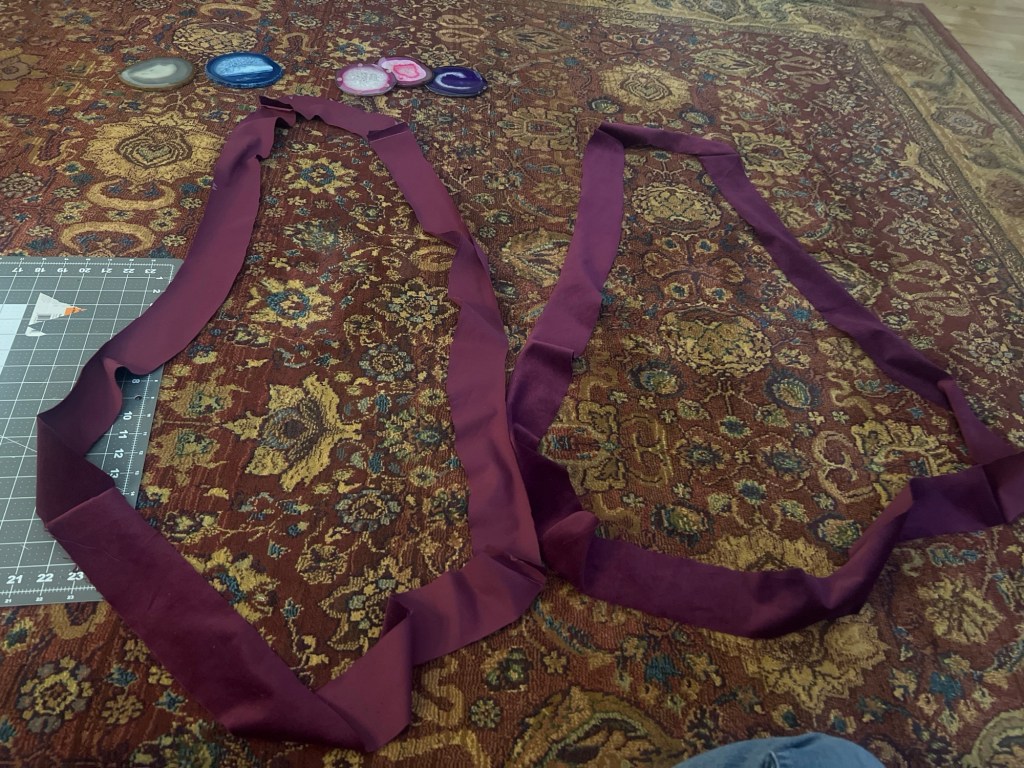
Now make the collar- first I form the collar, iron the bands underneath
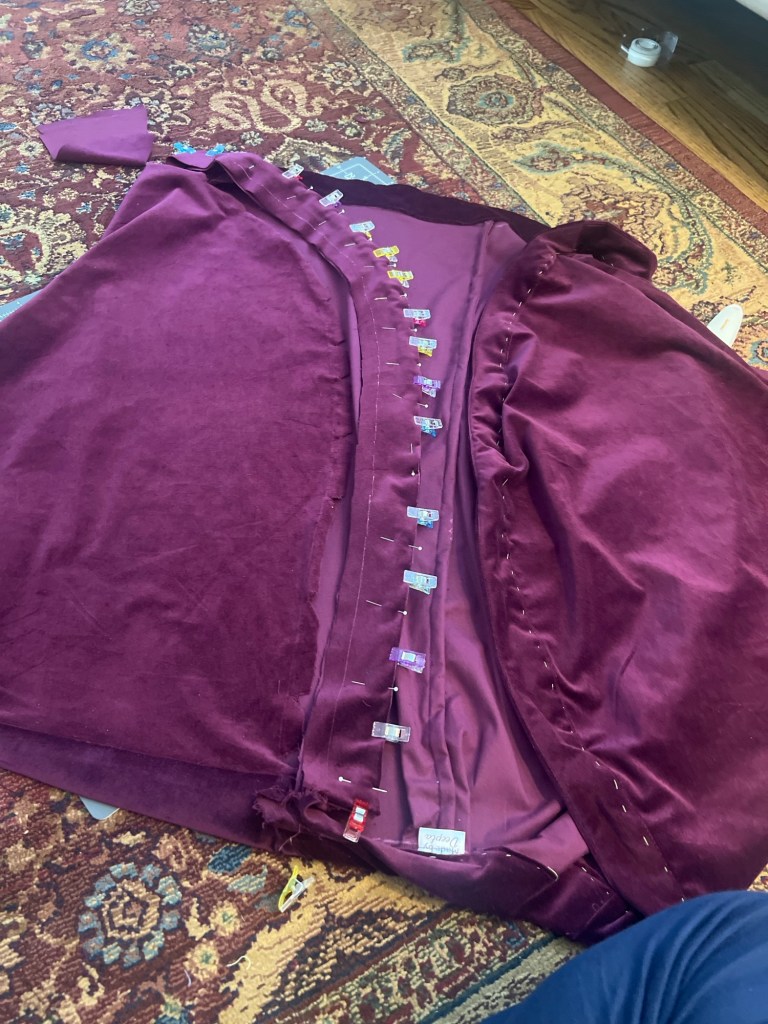
Now pin it up and baste in place
See the collar in and then top stitch the edges
Add a lower frill – use gather stitches and baste – it take a while
Sew the last frill in- join the pieces, add 2 gathering stitches above and below the seam line
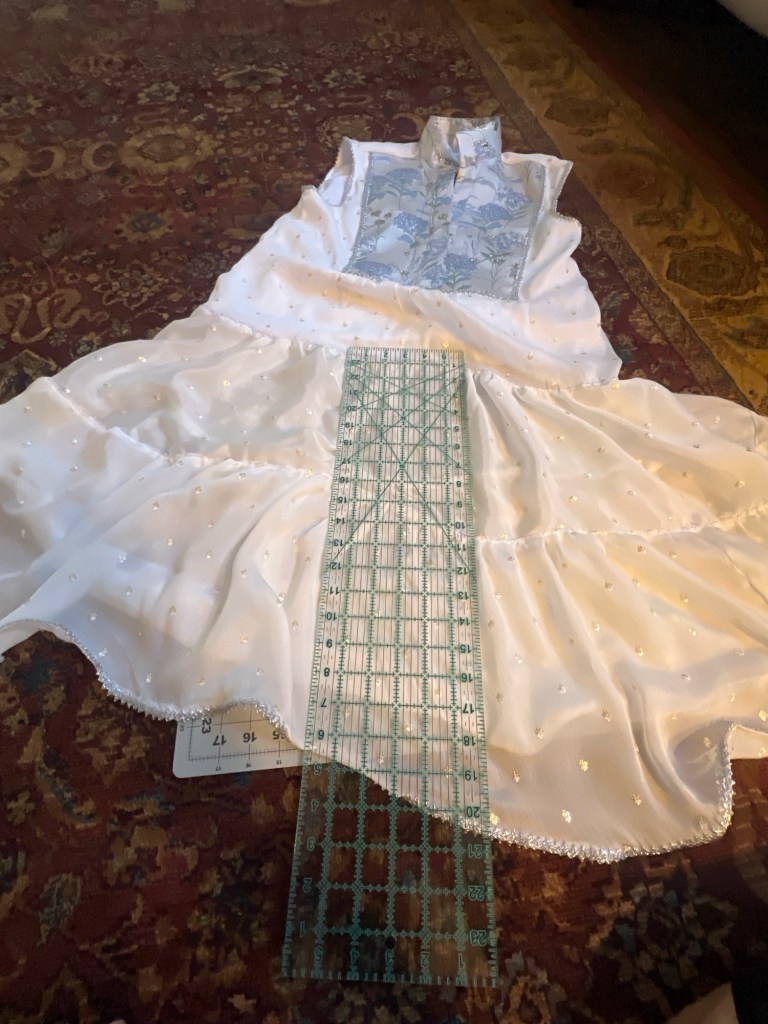
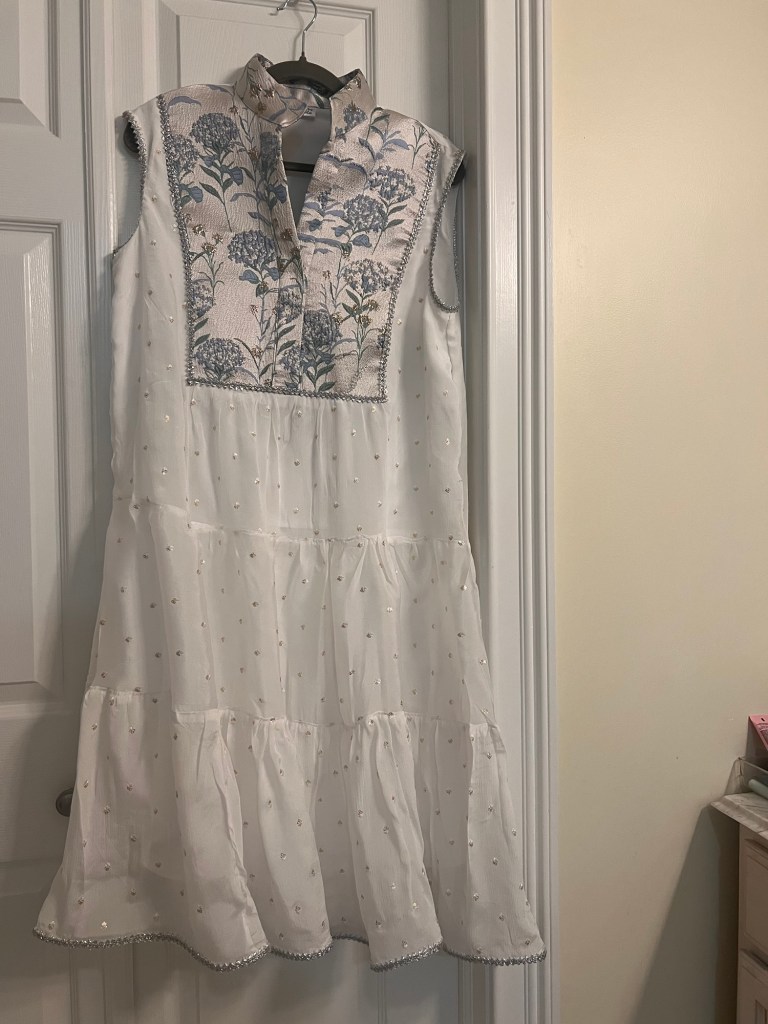
Add lower frill, add lace to edges – now figure out how long to keep the skirt lining – 18 inches seems good
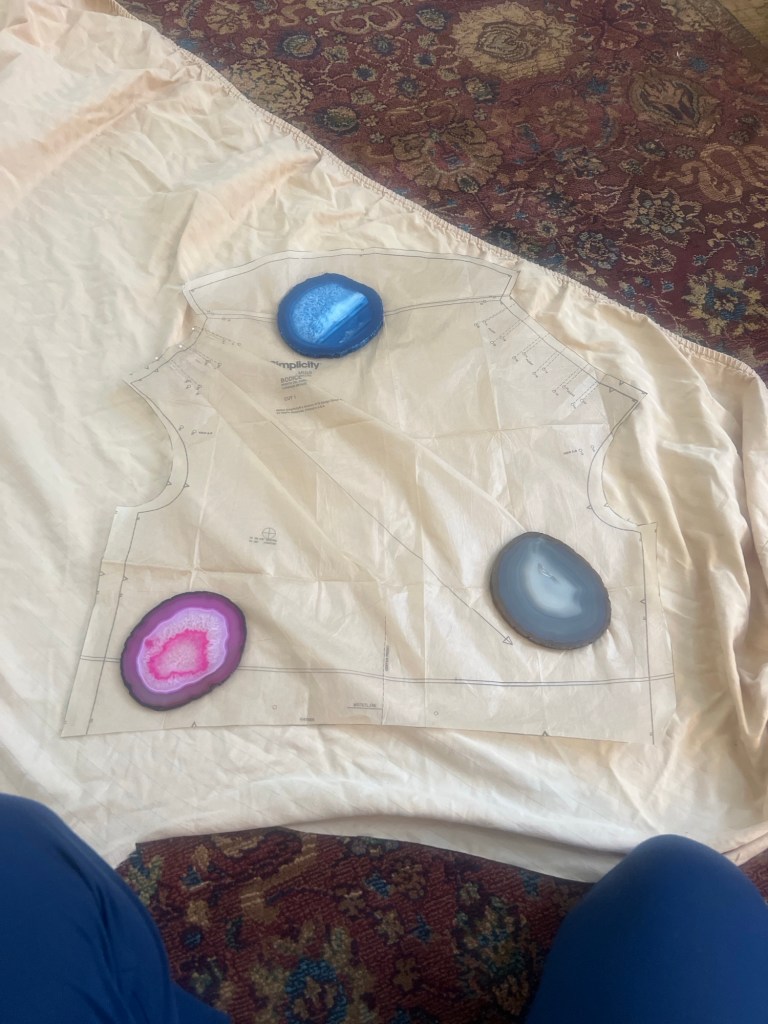
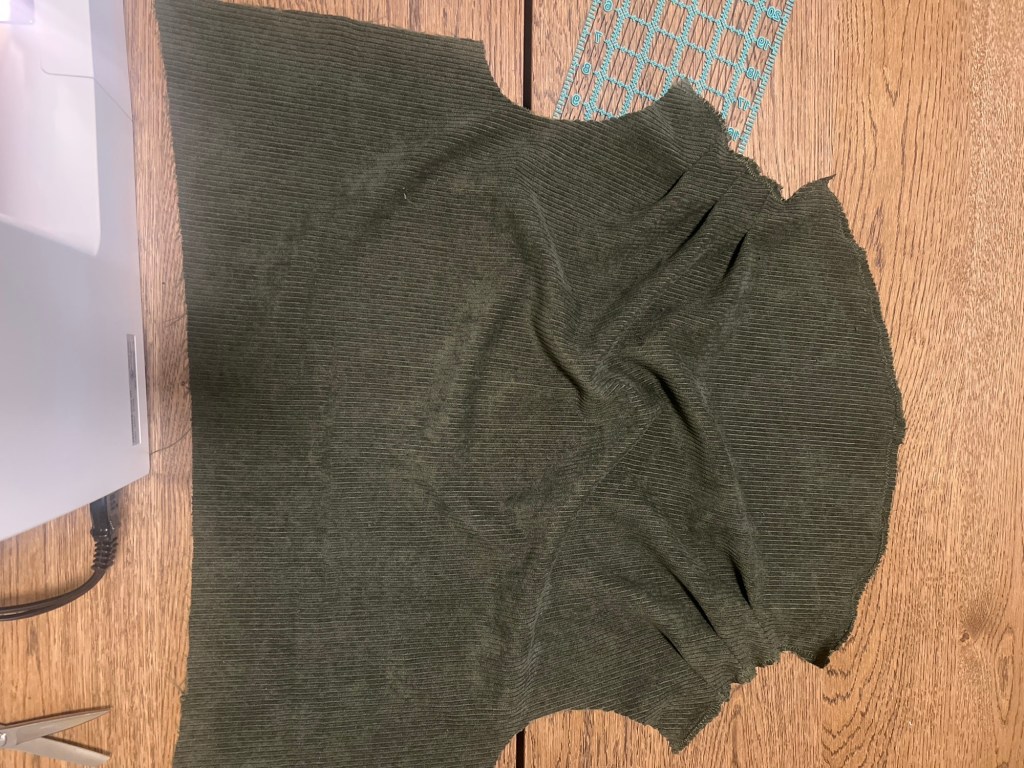
The aim is to modify this to give a saree appearance with pleats on the left shoulder front and back. Also I don’t like the peplum fold.
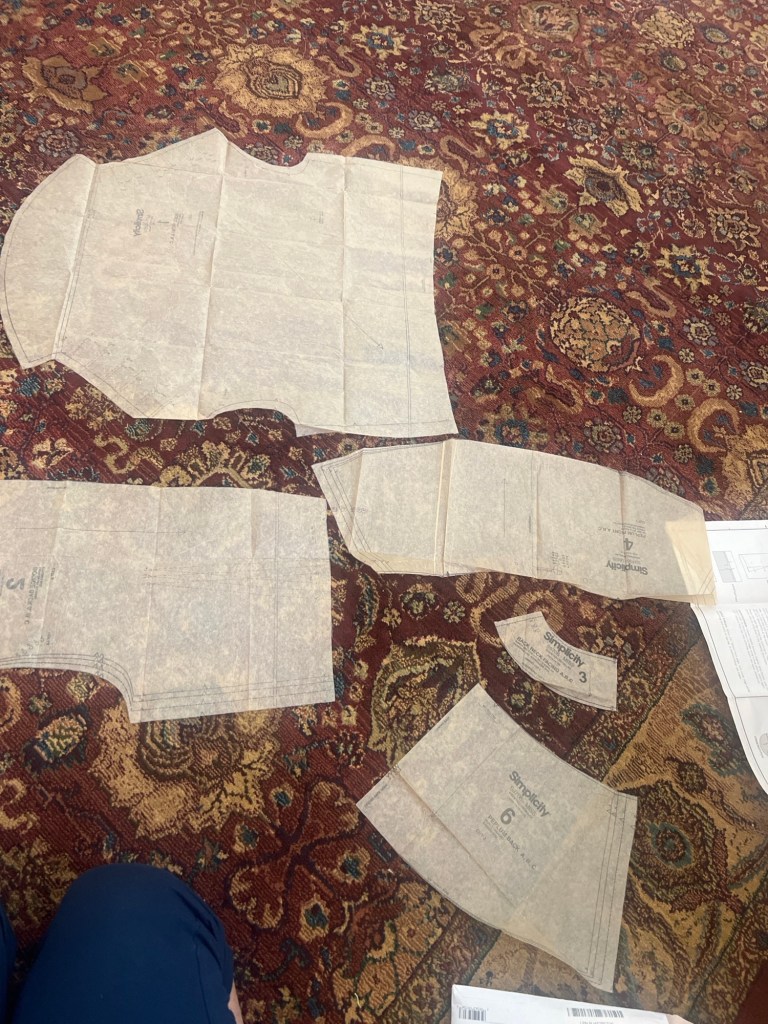
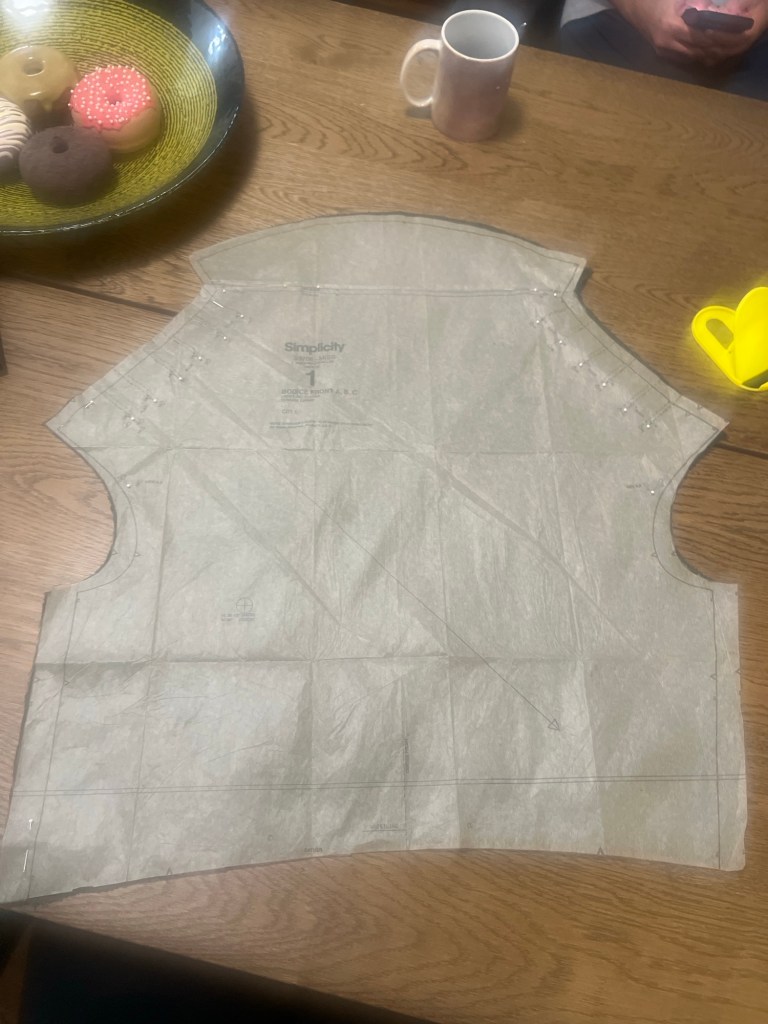
Step 1- cut out pattern for size 14
Now pin up the corner you don’t want pleats in and cut the muslin you are practicing on
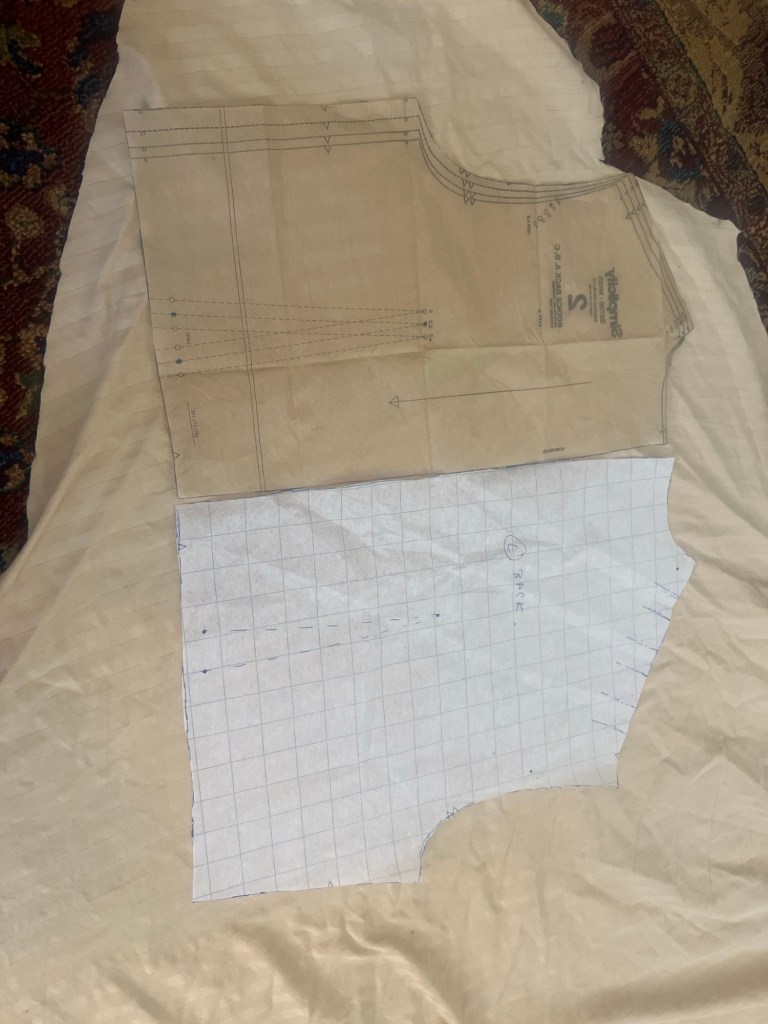
Keep one side of the back the same, add pleats to the other side
Ok that worked some – here is the Muslin mockup
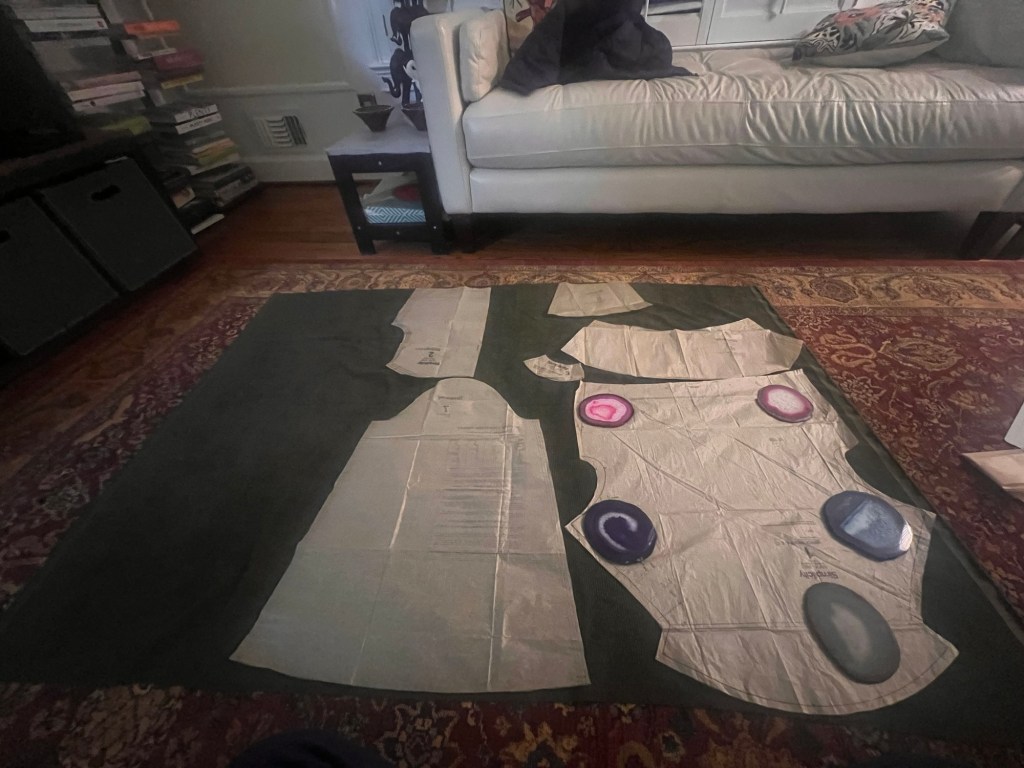
But I’m going to try the full sleeve version. I have a 1 m corduroy fabric – let’s see if I can cut a full sleeve blouse from that
Transfer the markings
Sew the pleats and tack them to the inside – edge finish the tops with a zigzag stitch
Add back facing , understitch the edges and sew the shoulders and sides
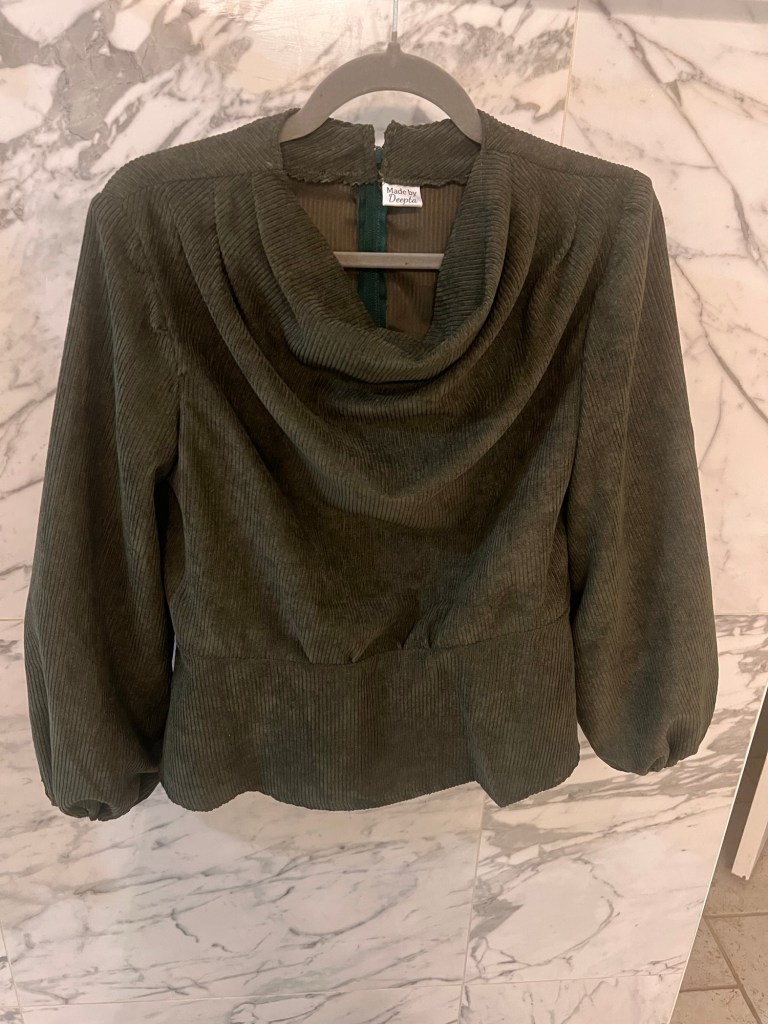
Add the peplum – sew it together and then you will need some gathers. I modified the peplum to add 2 inches – half inch to each side. My waist is larger than the 1970s ladies
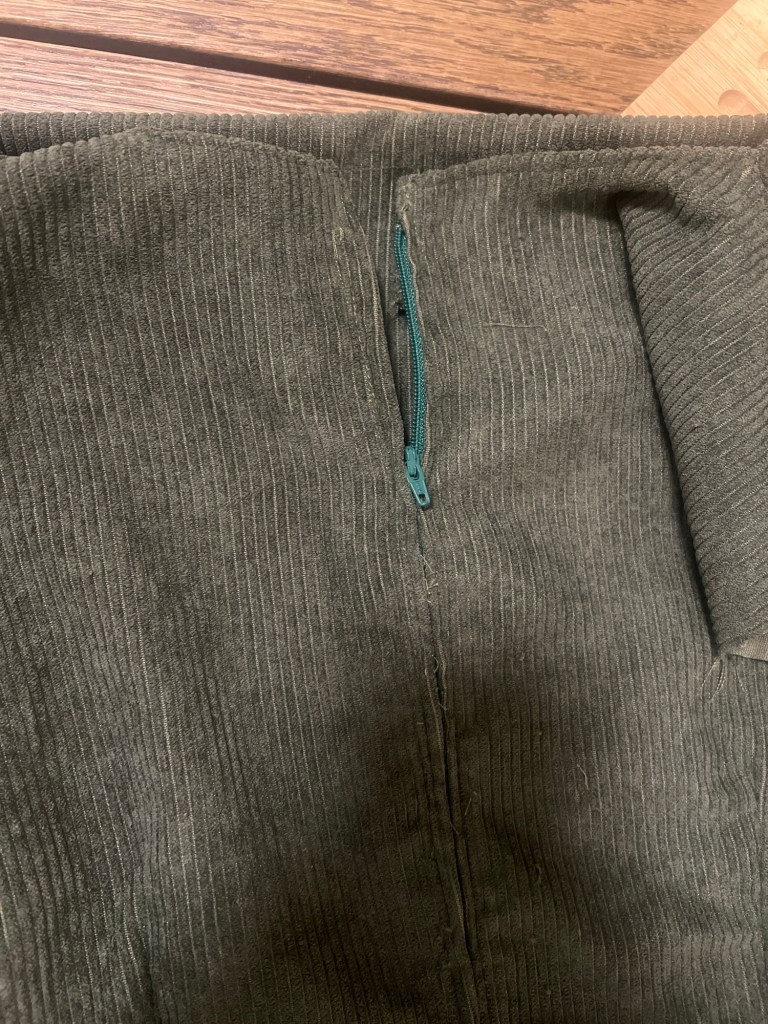
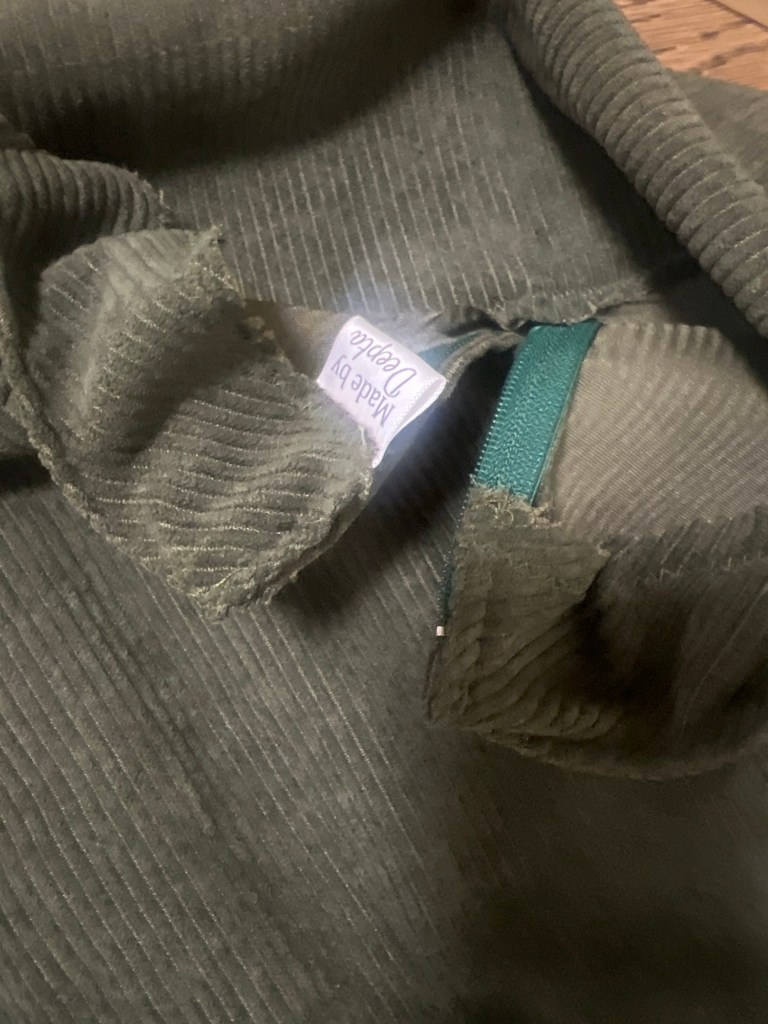
Add the zipper – make it invisible , tack down the back facings after . Add a label. Also then wish you had a serger for prettier edges
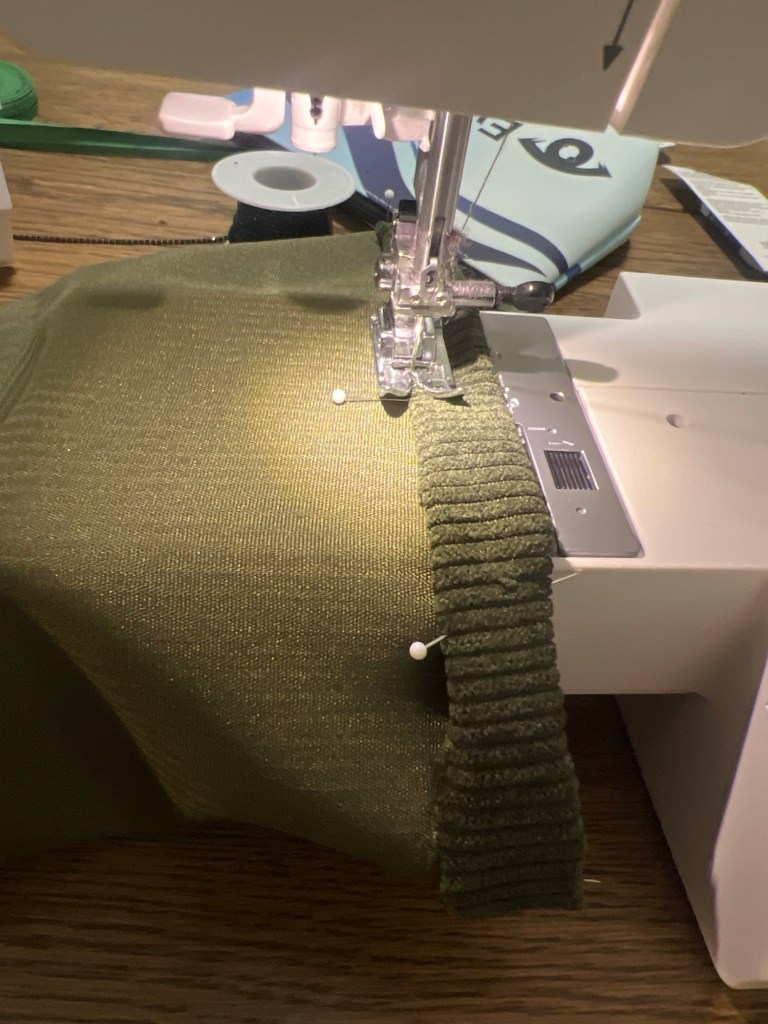
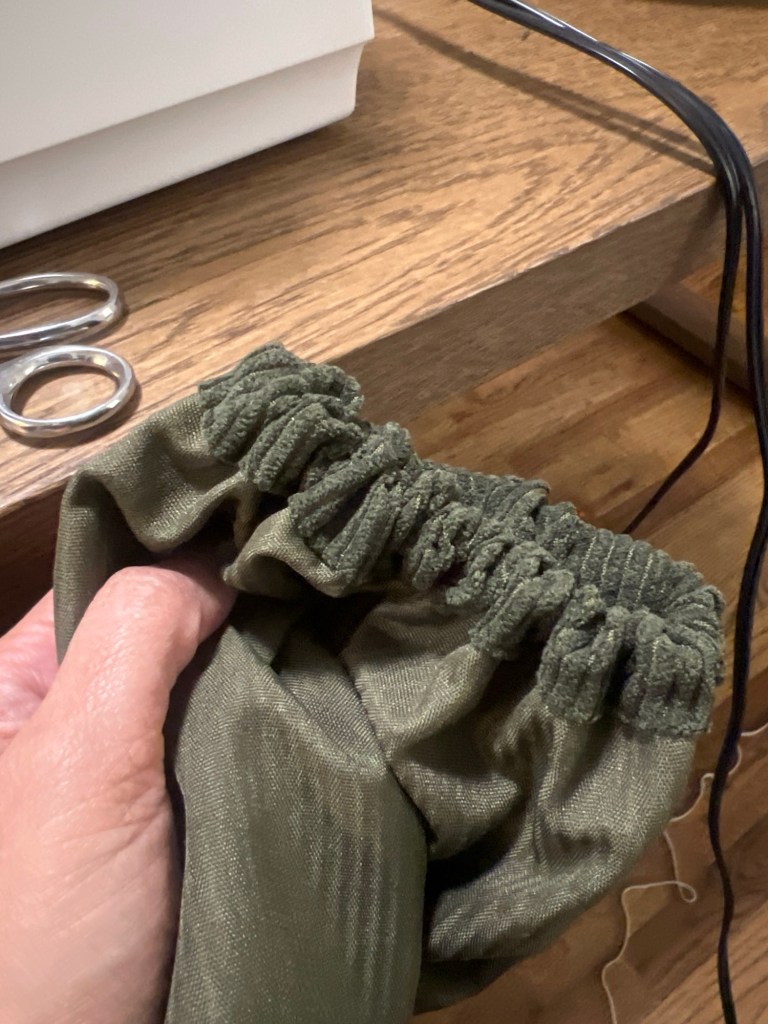
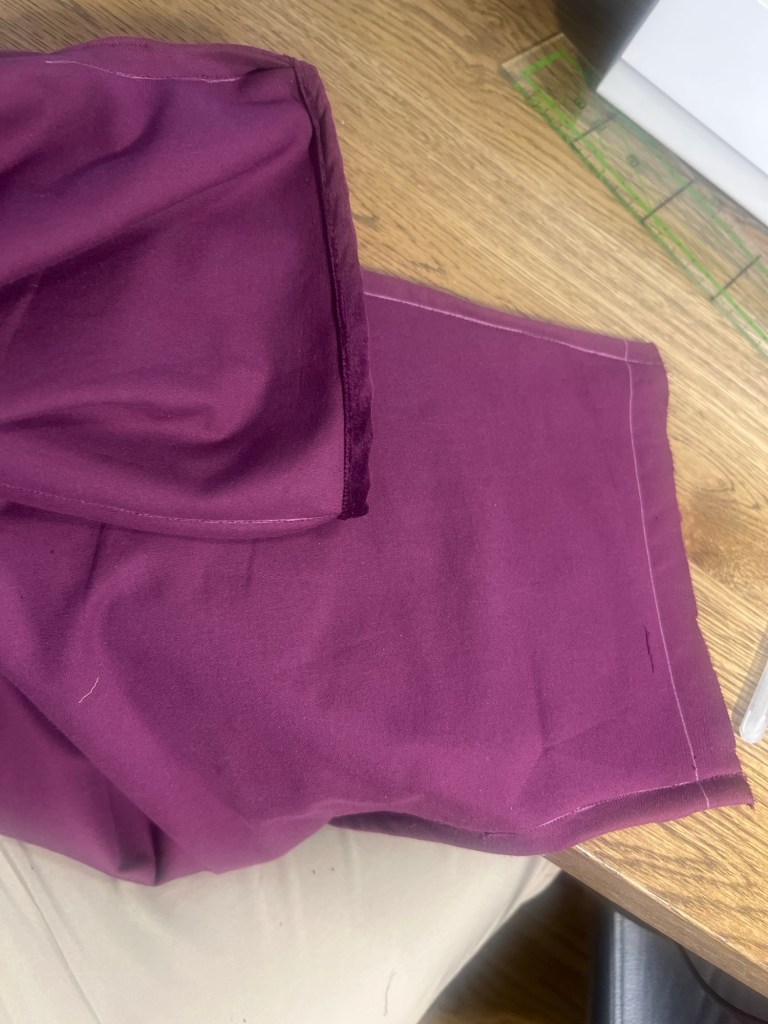
Now the hands- sew the edges together. I do the gathering stitches in a contrasting color. For rhe sleeves, turn in 7/8 inches, press under slightly and sew to form a 3/8 inch so so casing channel for elastic
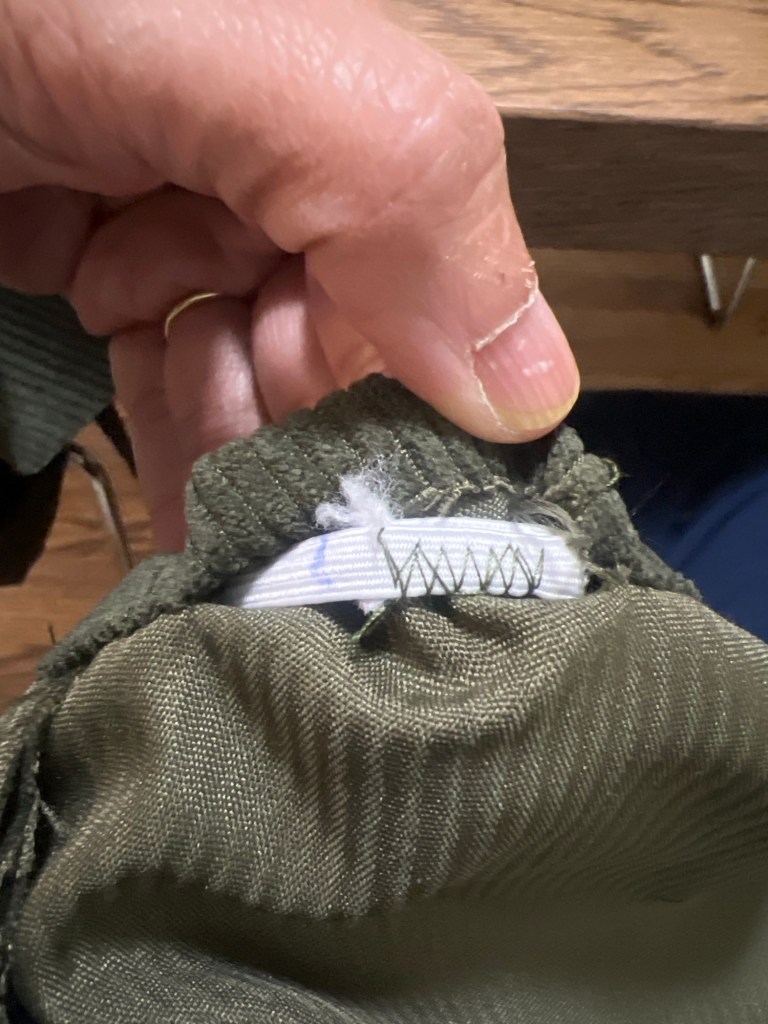
Making casing , feed elastic in, sew together and close casing- you have an elastic sleeve
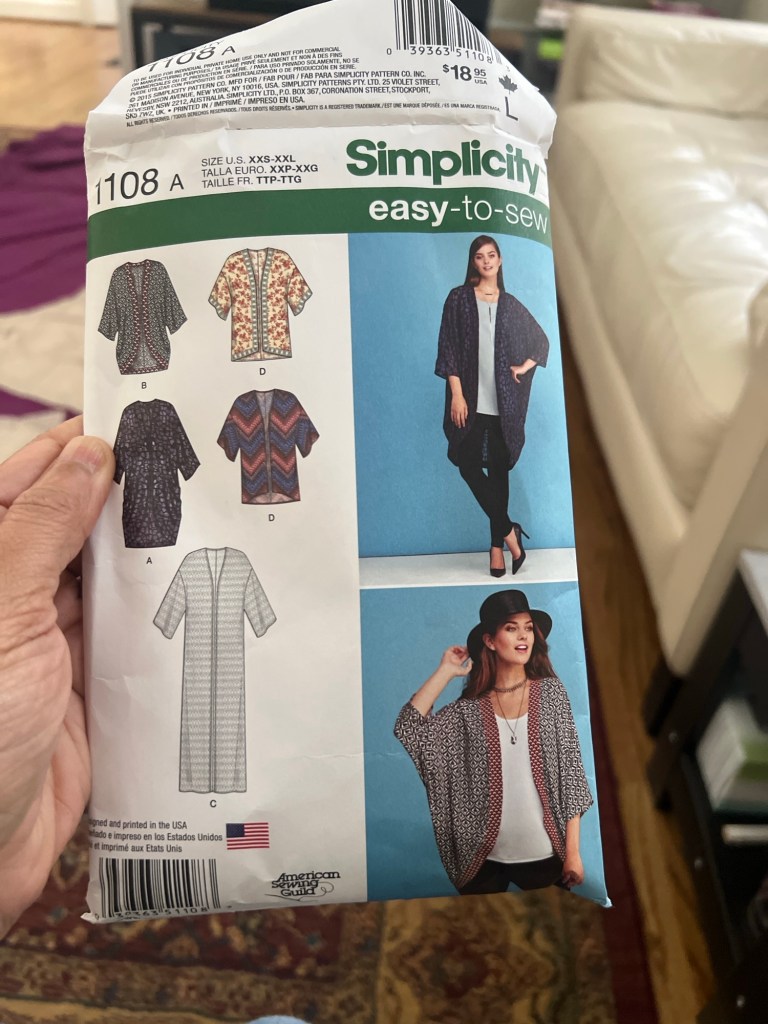
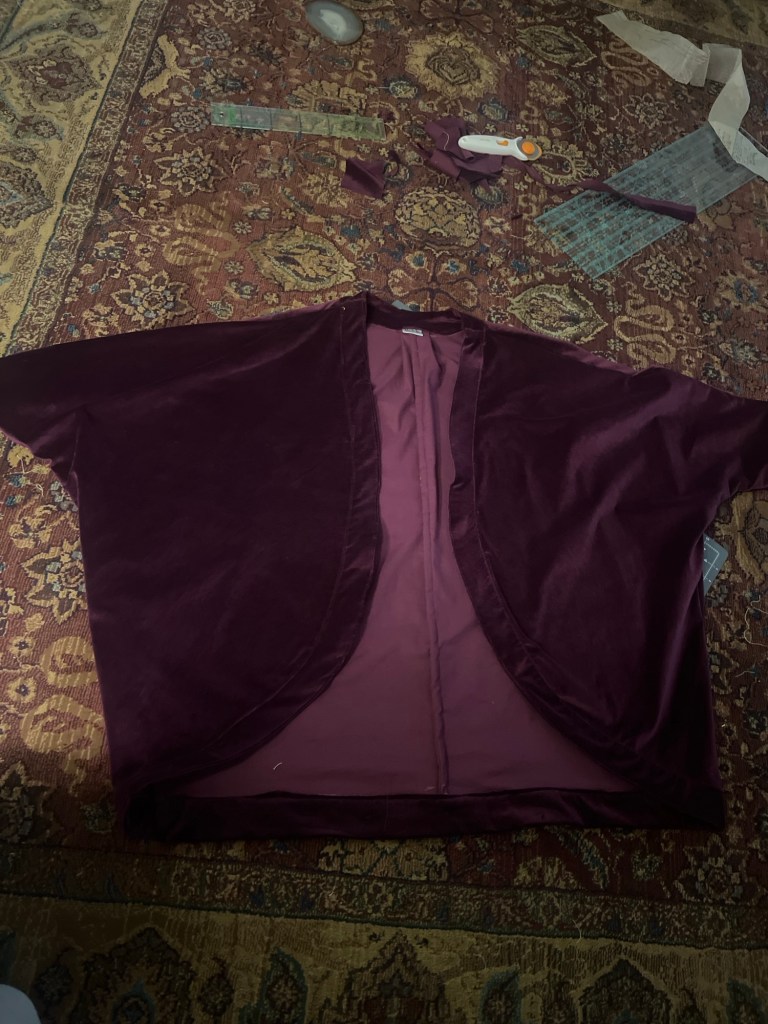
This was the pattern and I planned to add a drawstring and buttonholes at the waist and make the kimono in velvet and get the trims in India
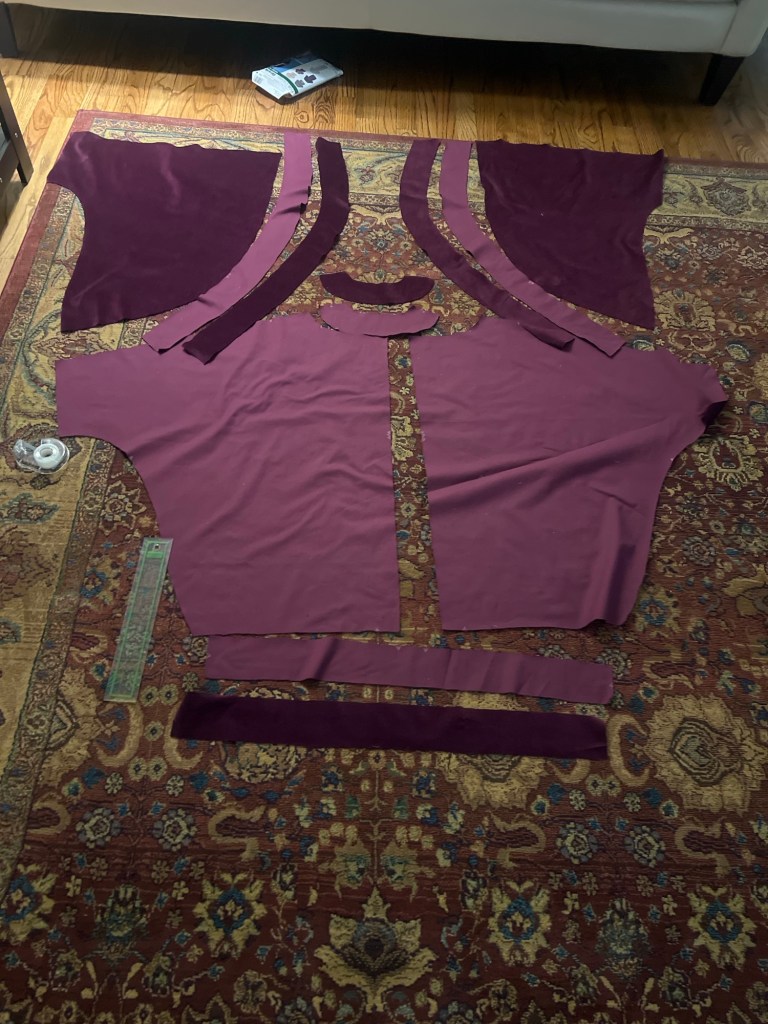
This is how it started – you have to be careful of the nape in velvet – it has to drape the same way
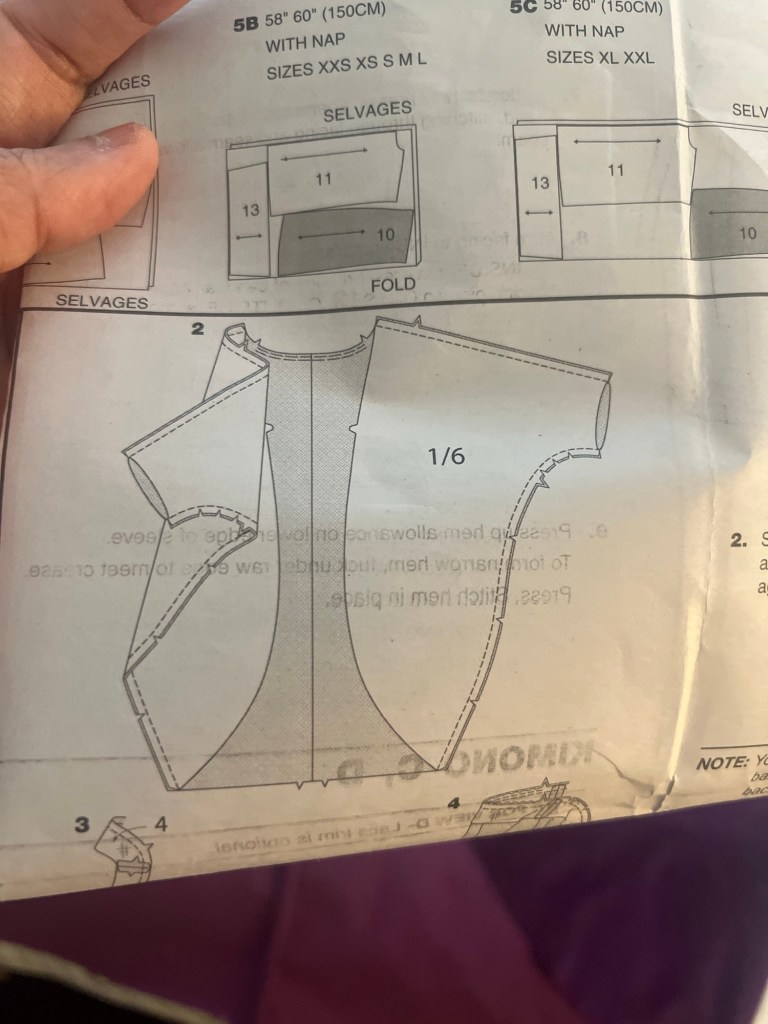
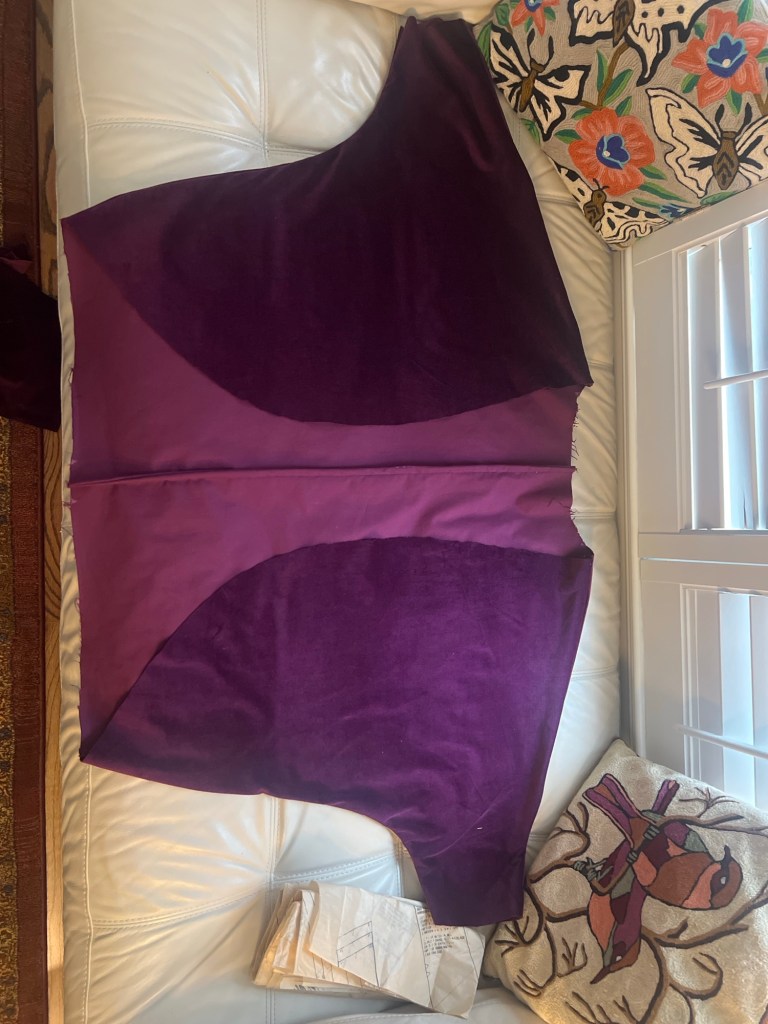
Sew the back , shoulders and sides with a 5/8 inch hem
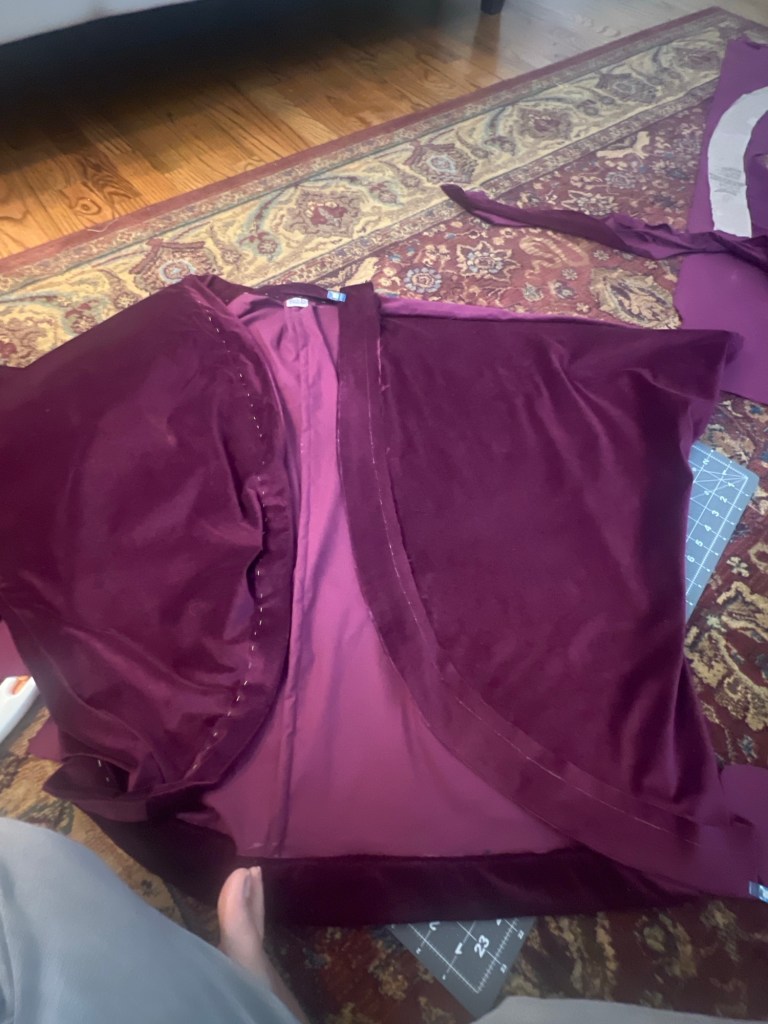
Arrange the borders and connect them – 5/8th seams !
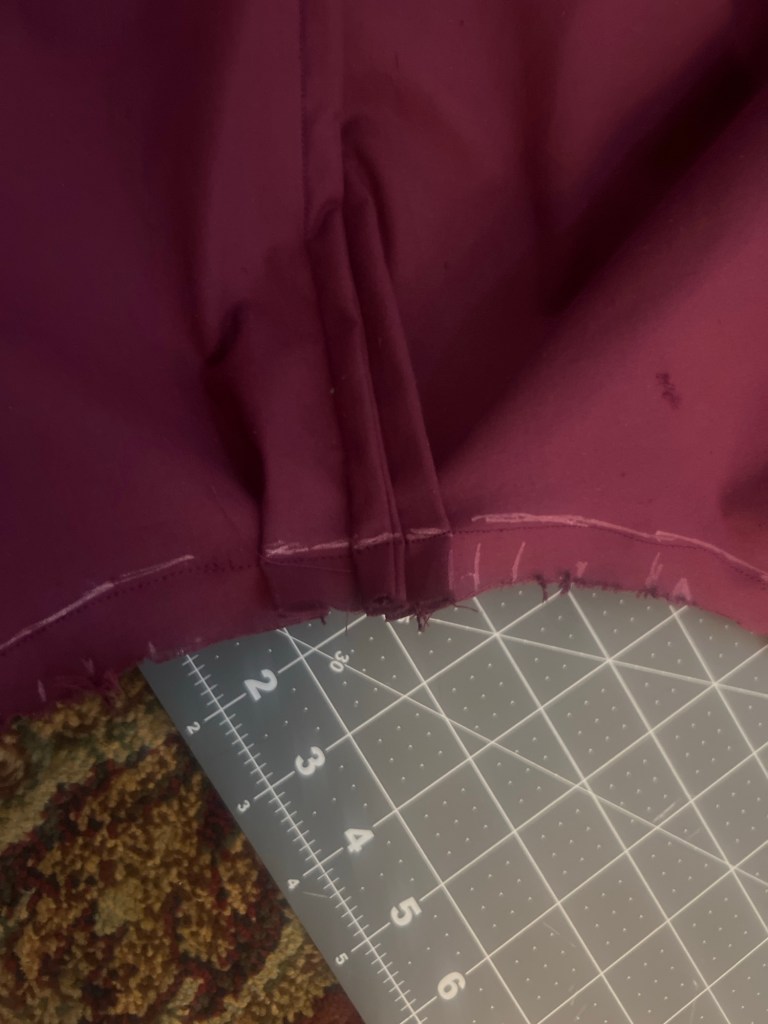
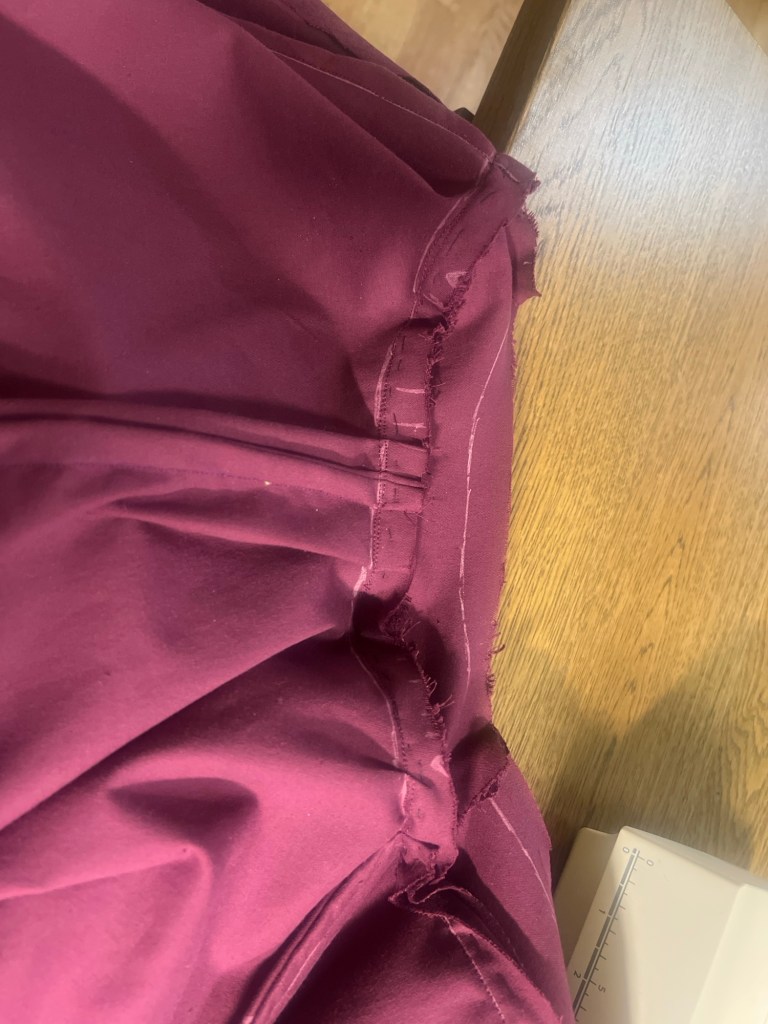
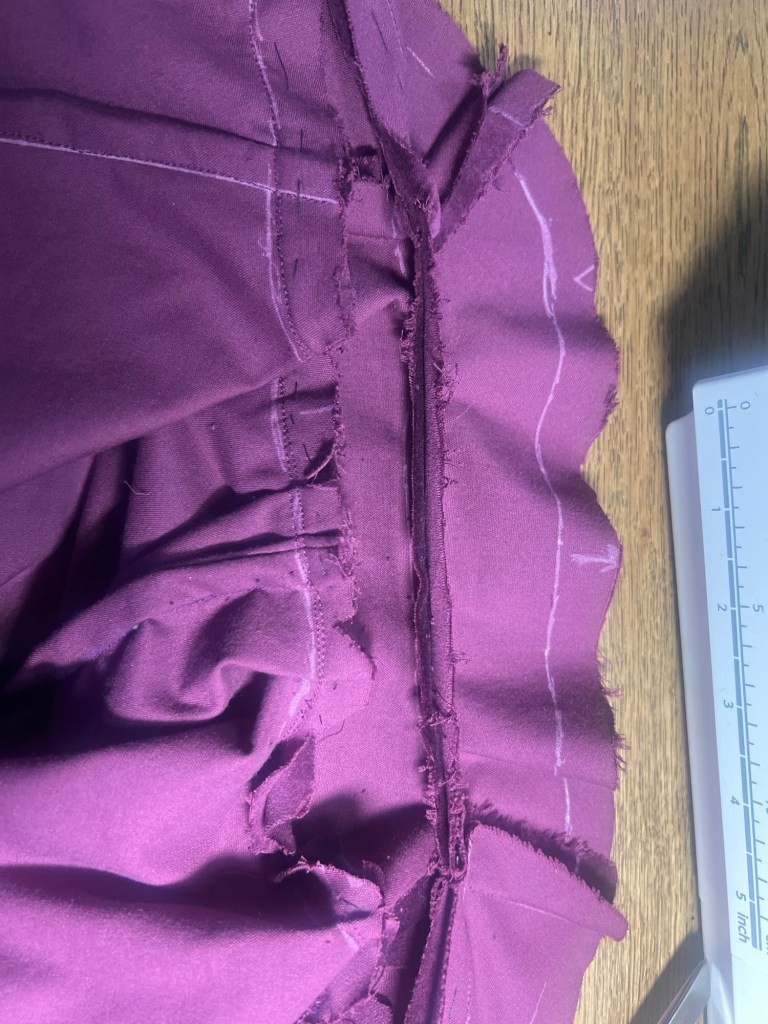
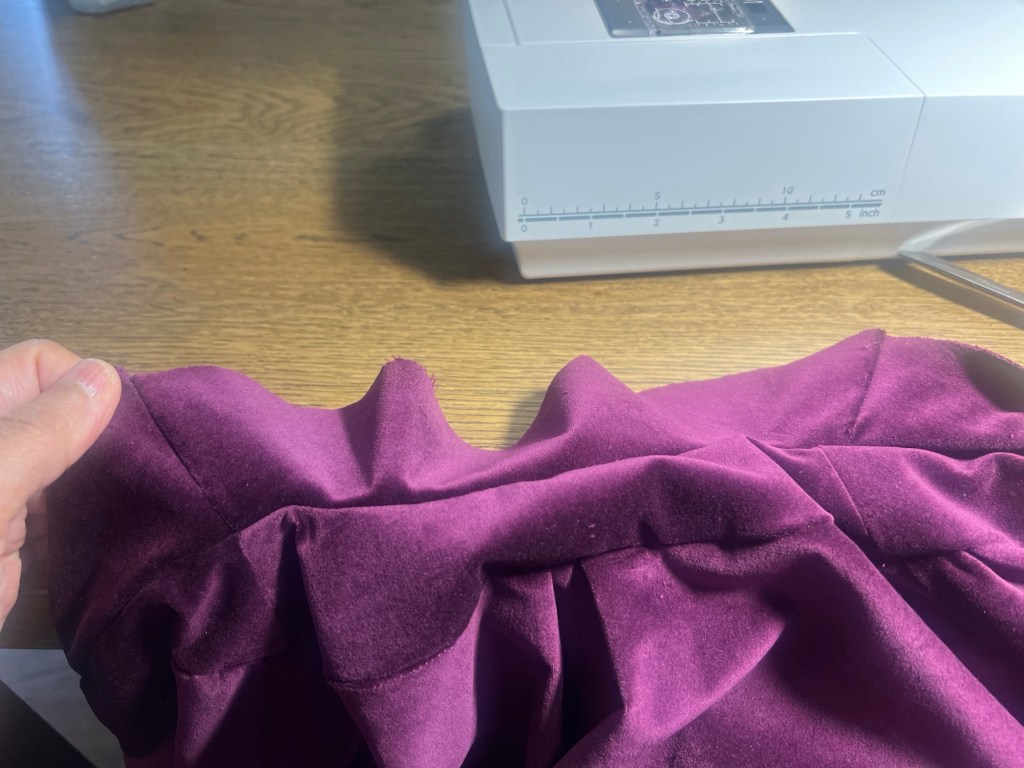
Make one inch box pleats on either side of midline so the neck band fits, alternatively you can do gathers- just so the notches line up. Then add a staystitch just under the hemline
Now sew that trim on matching the notches and the seams and the curves – I used basting stitches for this one
Sew the other band on this way and notch all the curves
Have a done a great job on the seams ? No! It’s fine- it’s a drapey top
Turn the edge over and sew down over a basting stitch
Then realize that you’ve messed up the nap and have to redo a whole band so cut new pieces and start the unsewing process
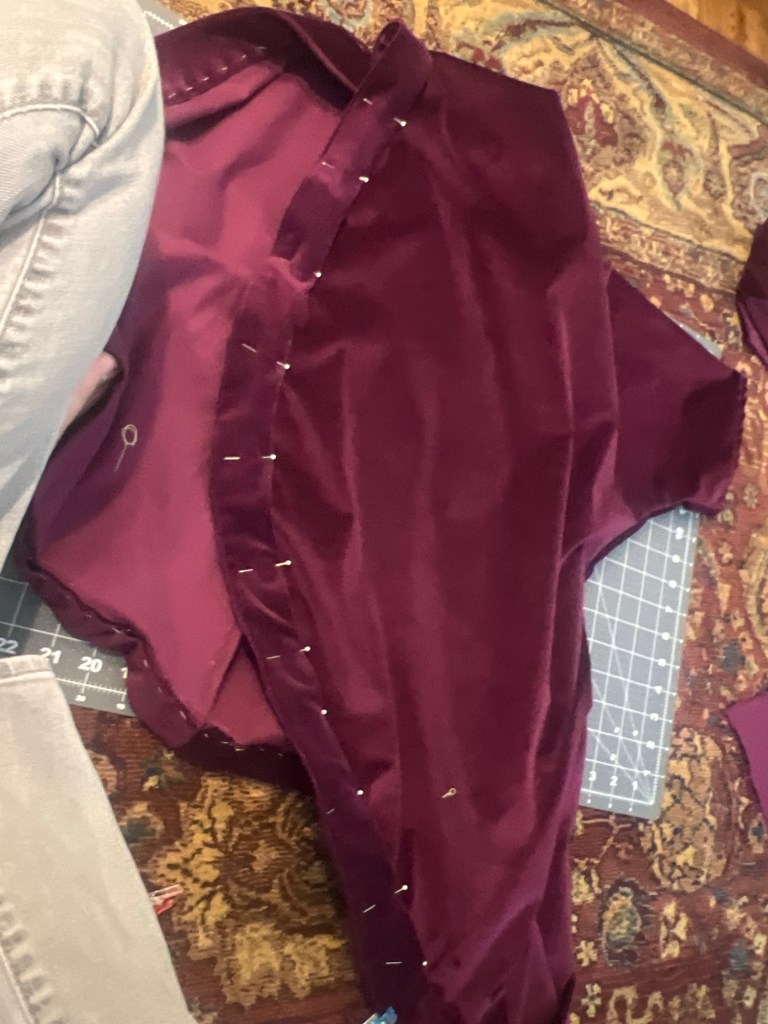
Attempt 2- pin the band and just planning on a top stitch
Fold the other side in and make sure band lies flat
Ok so far laying much better than other technique – may have to redo other band too
Now pin it in and sew
Ok this worked beautifully – annoyingly I have to redo the other side now
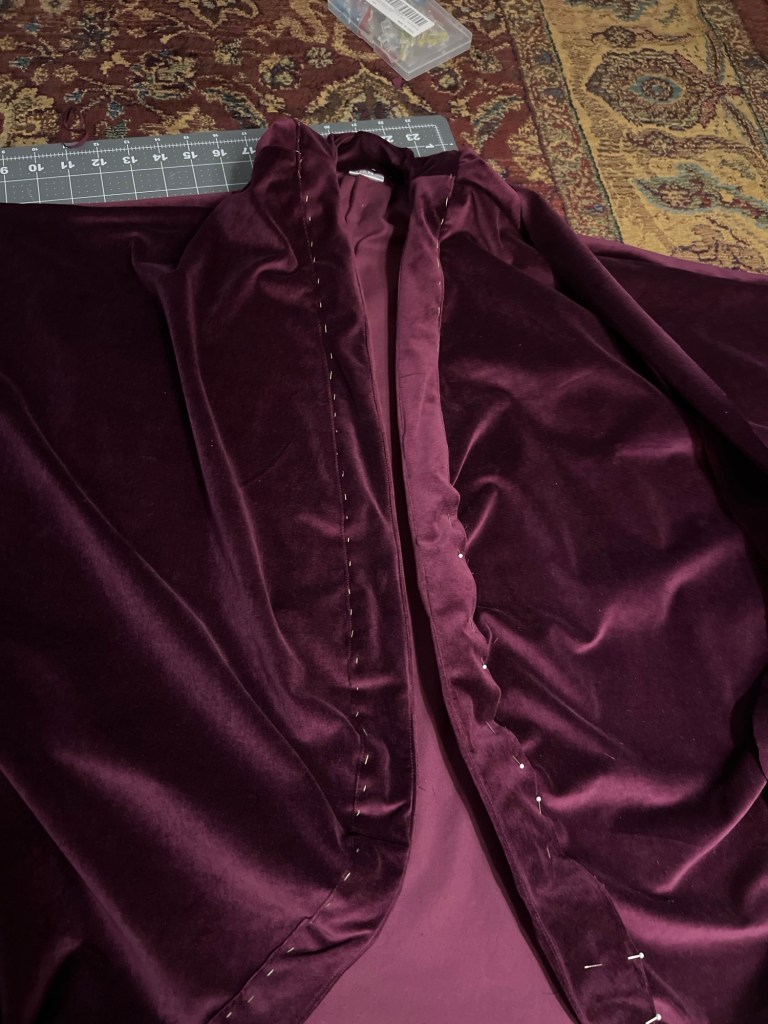
Done with the other side ! This is how I’ll be doing my front bands from now on
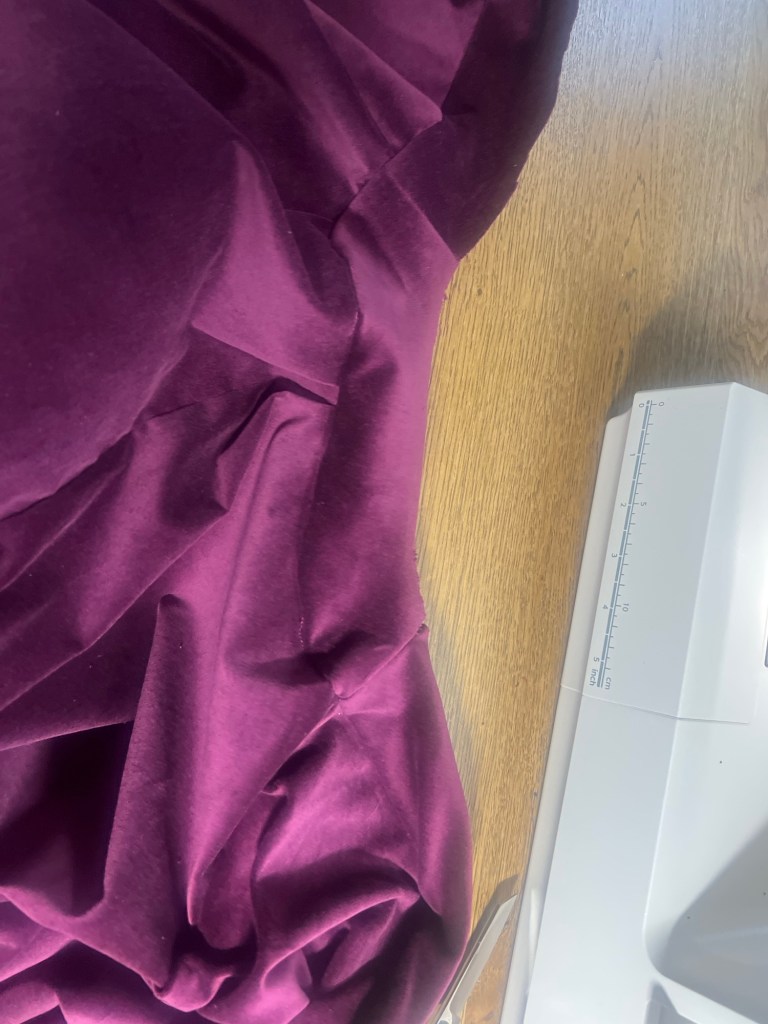
Hem the arms to 5/8 inch
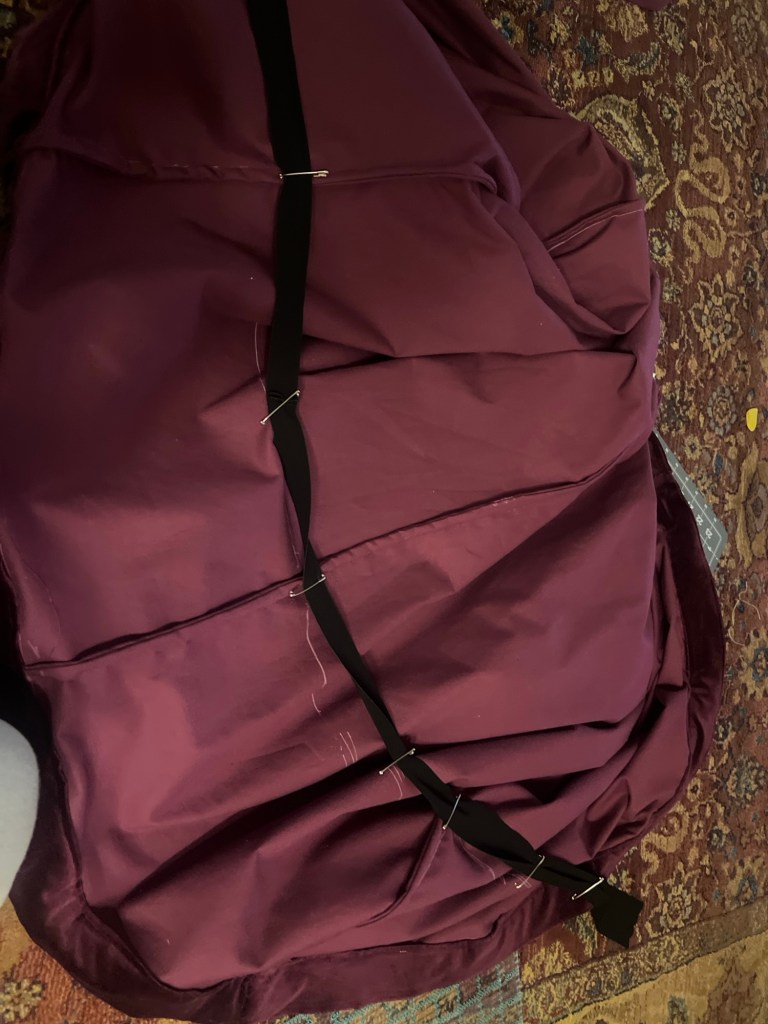
Now for the drawstring – first use safety pins to make sure the placement is correct
Ok that turned out cute- more to follow when I get the trim
I’ve been on a long quest for the perfect potato sagu- the kind served with rava idli and ghee in Bangalore restaurants. I think I’ve found it- the trick is thickening the potato curry with ground roasted chana dal. This is a satisfying curry – good with rice, roti or store bought Malaysian flaky parantha (lovely as a treat- but sadly too unhealthy for daily eats)
Step 1: wash and dry roast 1/4 cup of chana dal till pale brown- grind fine in a coffee grinder. Make a paste with about half cup of water
Step 2: tempering – standard South Indian – in 1 -2 tbsp of oil, add 1/2 tsp of mustard seeds and heat till they sputter, add 1/2 tsp of cumin seeds, a pinch of asafetida, 1/2 tsp of turmeric and 1-2 dried red chilies and 2-3 kadipatta leaves.
Step 3: add chopped potatoes and water and salt and boil for 10-15 minutes till cooked though
Step4: add chana dal paste, cook for 5-10 minutes. Garnish with roasted cashews and cilantro and squeeze about one lemon to taste in the curry off the heat.
This is such a good recipe. It’s reminiscent of the Indian khichdi but better !
I modified it from this NYT one. This recipe is for 3-4 people
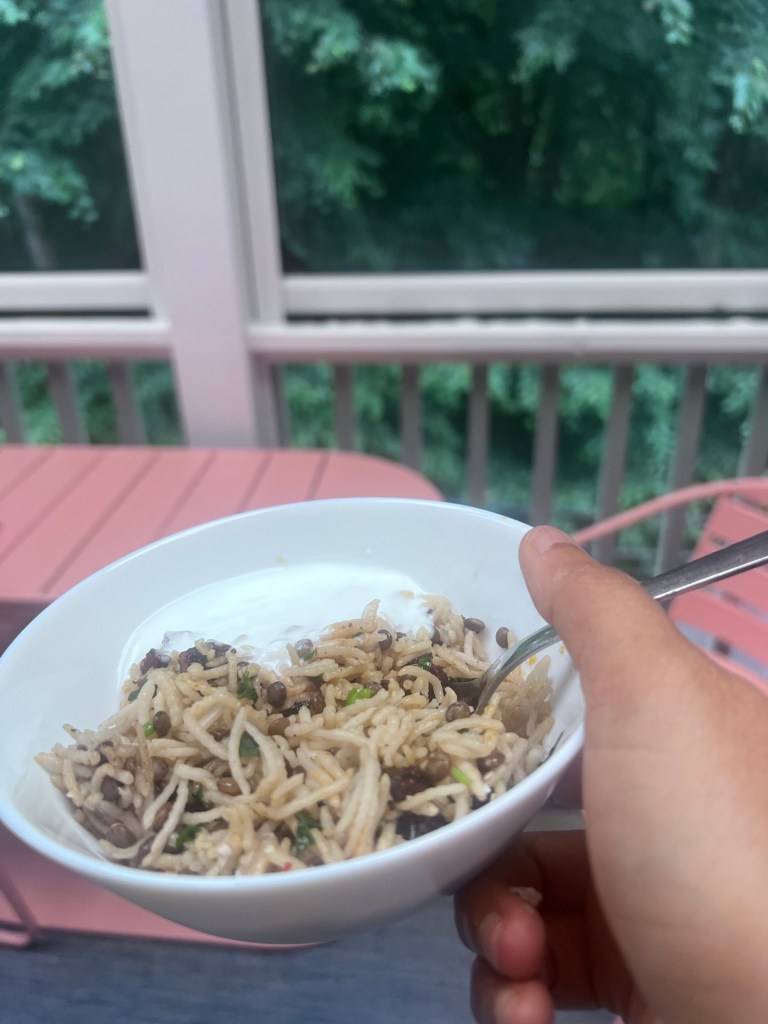
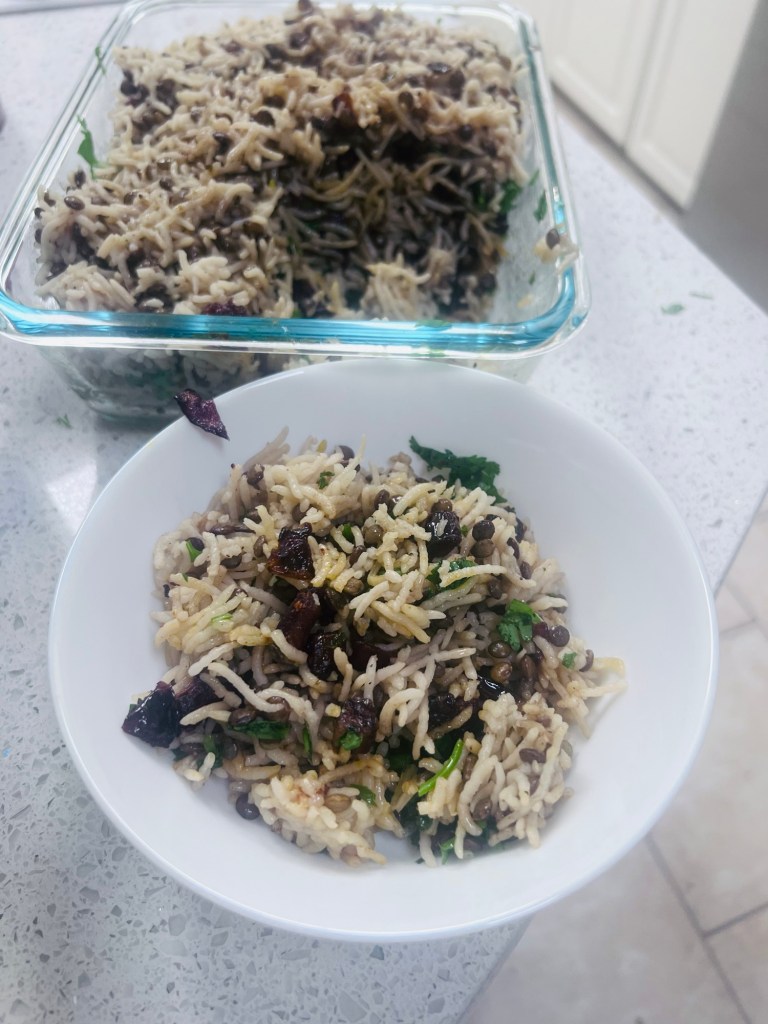
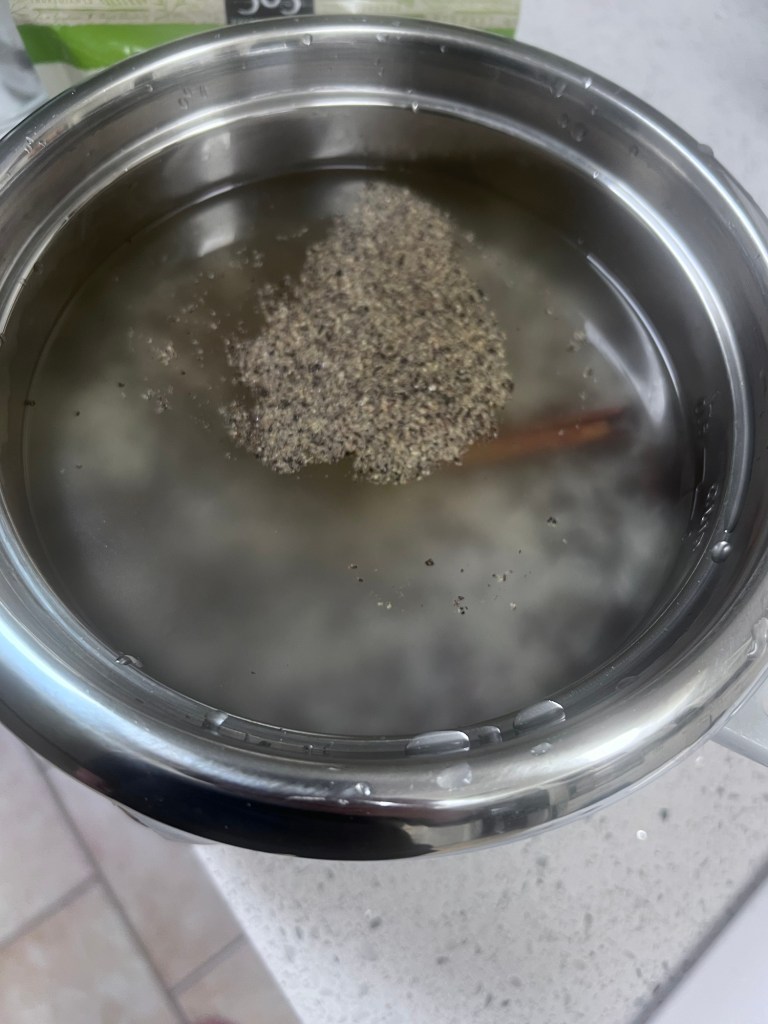
In a rice cooker , add 1 cup basmati, 1/2 cup small green lentils. Wash and rinse twice and add 3 cups of water, a small cinnamon stick and a pinch of saffron and salt and pepper . Let the rice cooker do its thing
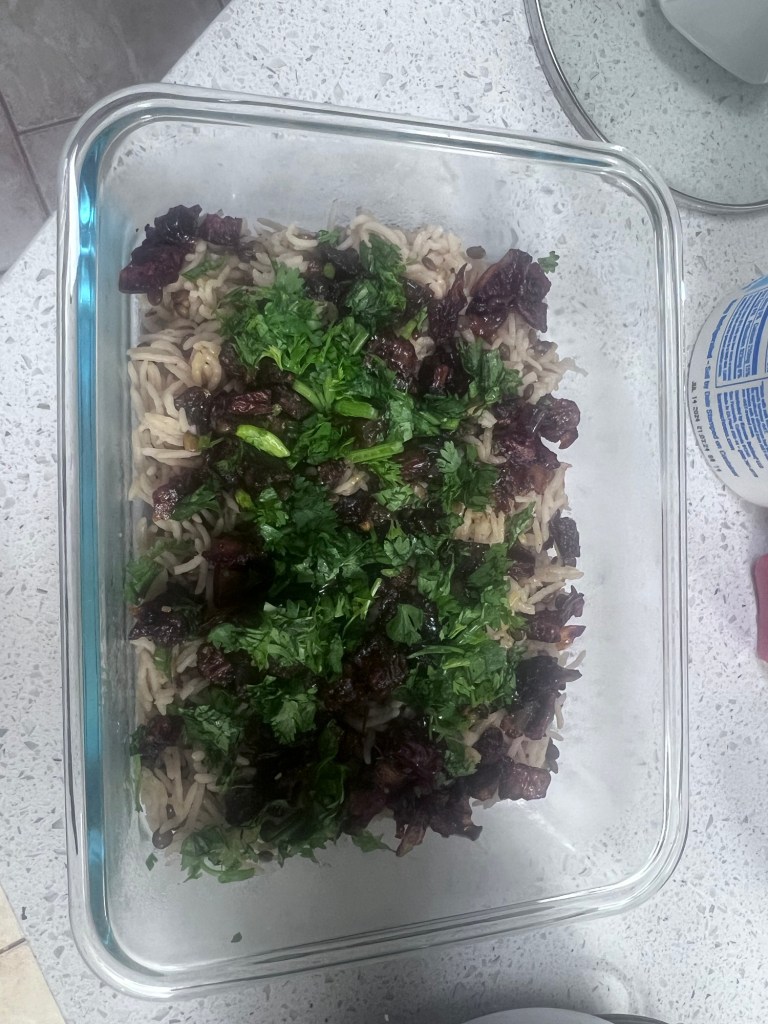
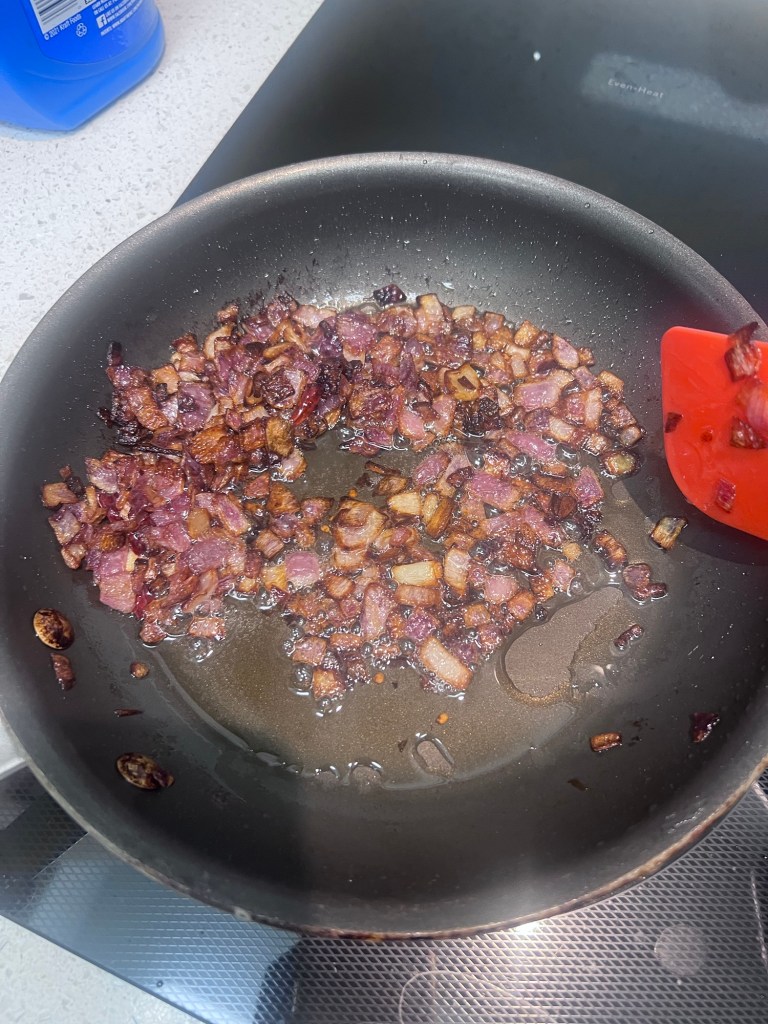
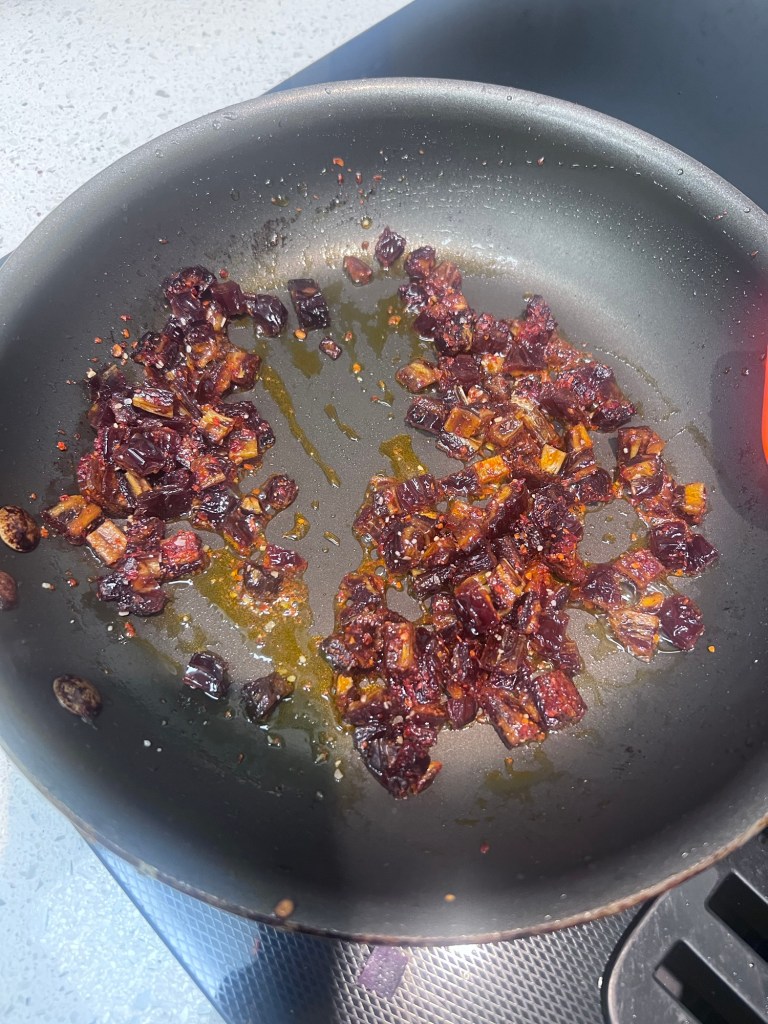
In a pan, heat some oil and fry up one large onion with some salt and pepper till it’s dark brown and a little crispy. This will take about 15 minutes. Make sure it doesn’t burn. Remove onion and in the same oil, fry up 6-7 chopped dates in the oil with some salt and I added Aleppo pepper (about a teaspoon). Next chop up a handful of herbs (mint, cilantro, parsley). Mix all that up
Now layer the rice with the onion-date-herb mixture. Drizzle with ghee (browned butter). Enjoy with salted yogurt on the side. This dish would be great covered with foil and heated just before serving.
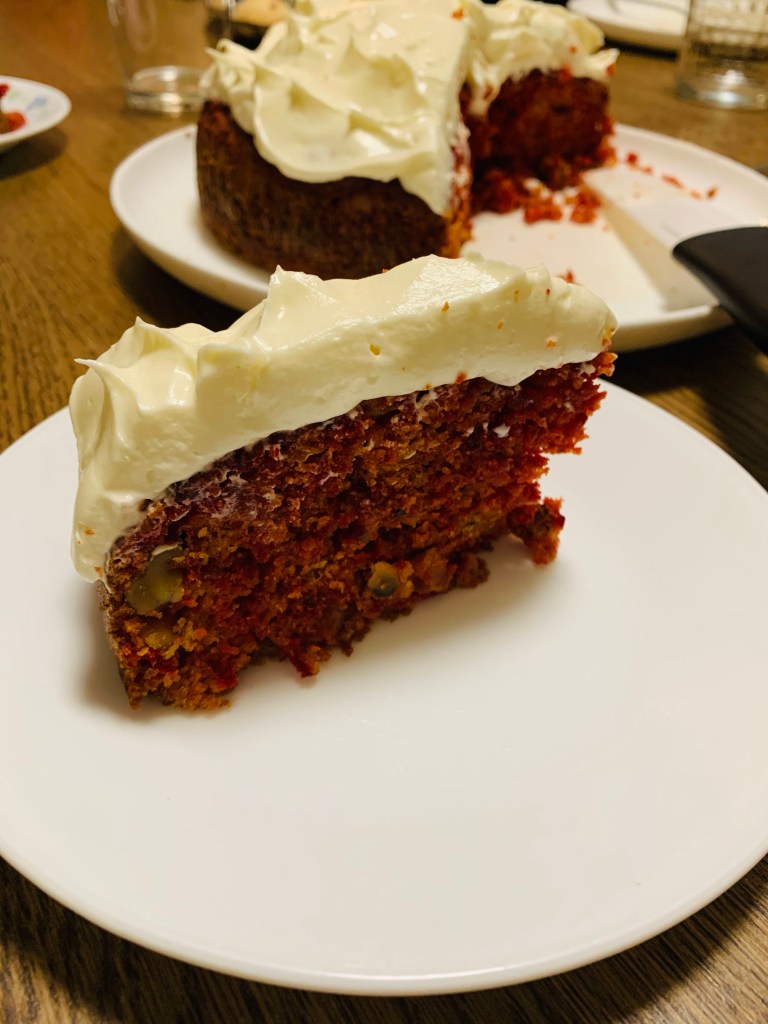
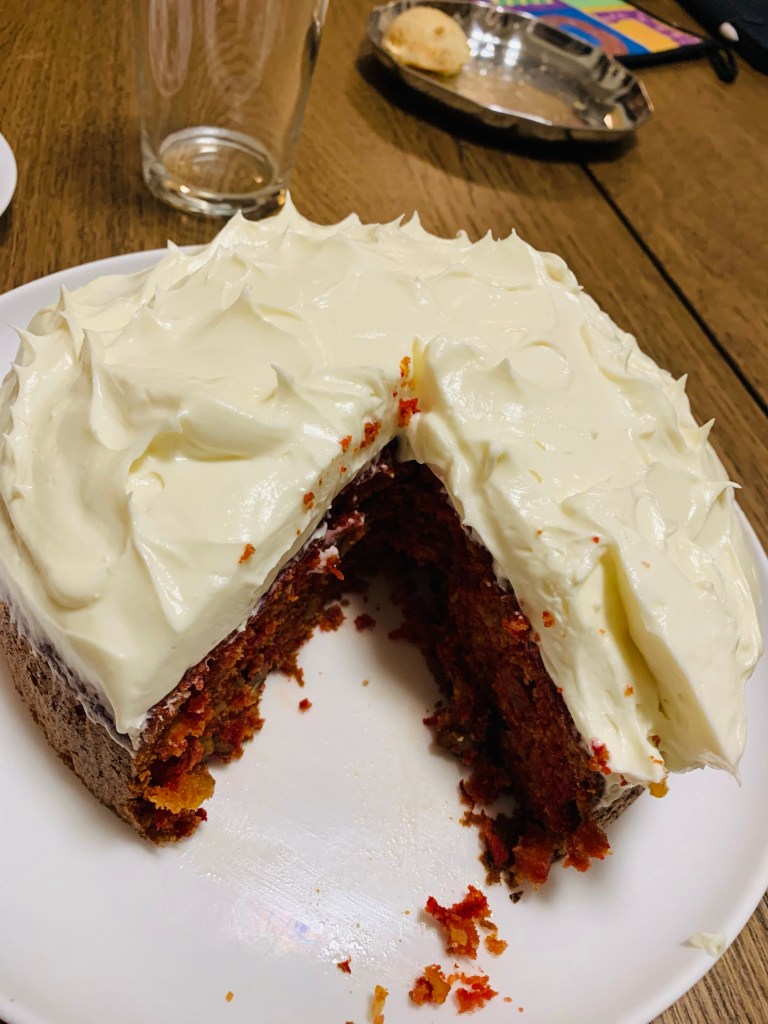
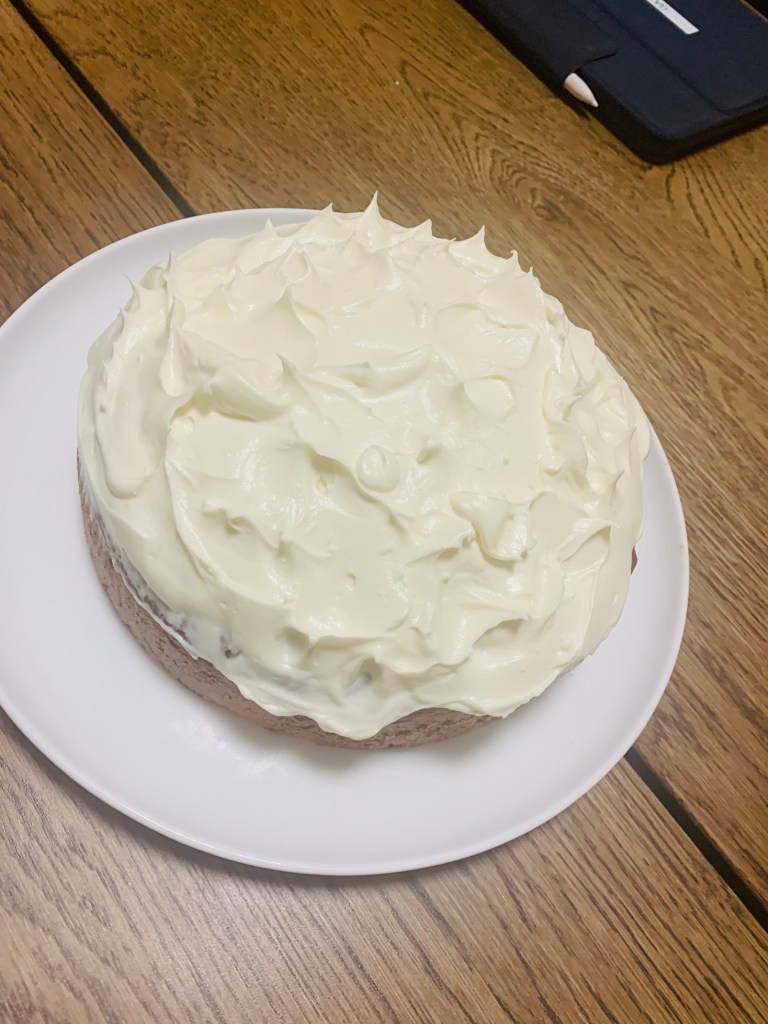
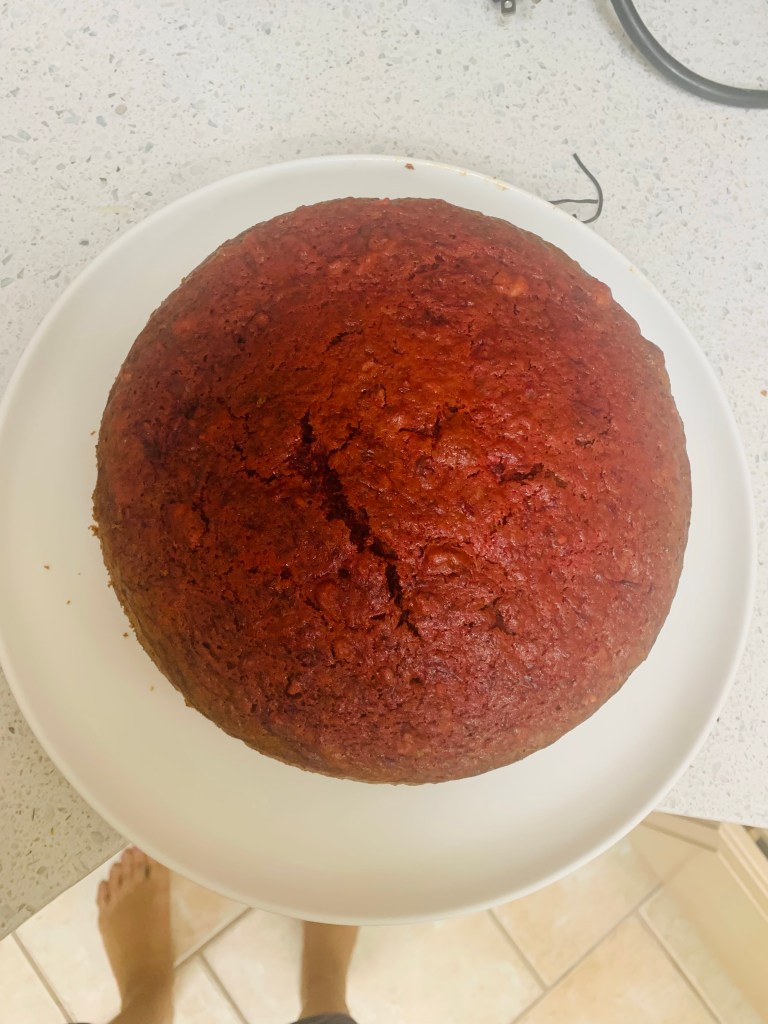
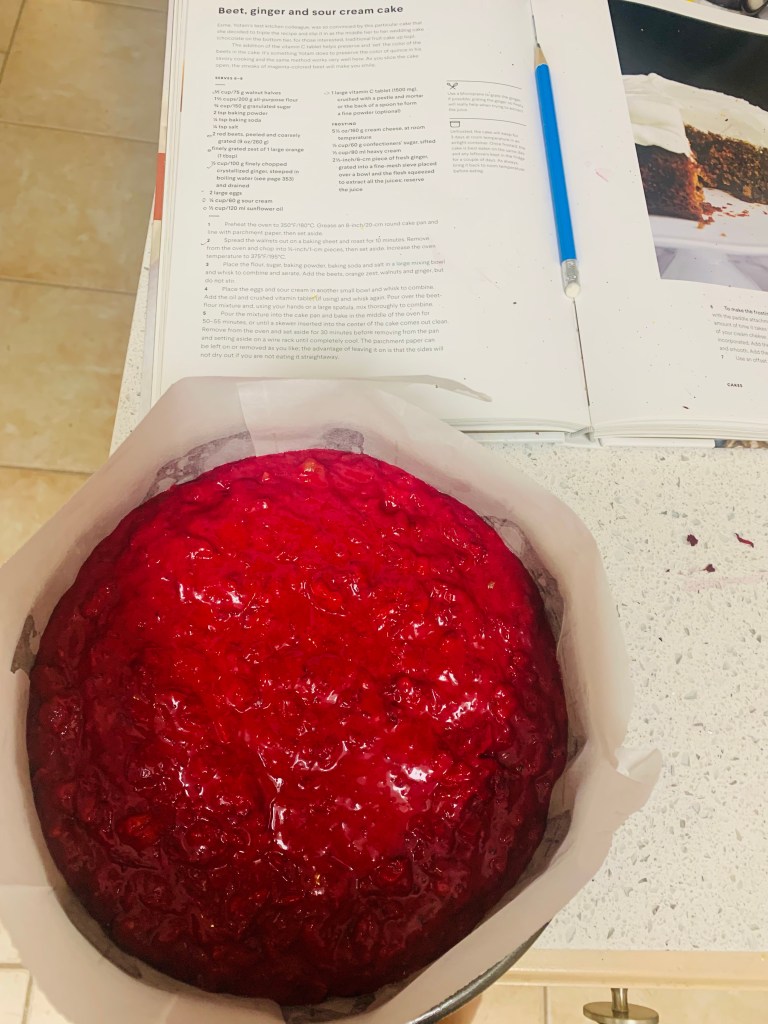
My Ottolenghi fandom has been well documented. All his recipes have worked for me – every single time. But this one from his book Sweet is spectacular. The frosting with its hint of ginger, the color of cake, and the taste (slightly earthy with a pop of ginger). As I said- spectacular.
As with any Ottolenghi recipe , this one begins by collecting the ingredients and prepping them. I suggest weighing them (Ottolenghi’s recipes all have weird cup measures because his recipes are devised by weight)- sugar is added to the dry ingredients here. No mixer needed except for the frosting
Preheat oven to 350 and prep an 8 inch round tin with parchment
Dry: 1 2/3c (200 g )All purpose flour, 3/4c (150g) sugar , 2 tsp baking powder, 1/4 tsp baking soda, 1/4 tsp salt- whisk all together or sift
Wet ingredients: 1/4c (60g) sour cream, 2 large eggs, 1/2 cup sunflower oil- whisk till well combined. Ottolenghi suggests adding 1500 mg of vitamin C crushed to a powder for color. I did this and it worked
Other: 260 g coarsely peeled and grated beets ( I needed about 3 small ones), 1/2 c (100g) finely chopped crystallized ginger (steeped in boiling water for 15 min and drained), 1 tbsp finely grated orange zest ( 2 medium oranges), 2/3 c (75g) finely chopped and toasted walnuts- mix all well
Add all ingredients together and mix till it all comes together without any dry flour with a large silicone spatula
Bake at 350 F for 50-55 min. Cool to room temp (about 30 min)
Frosting- 160 g cream cheese , 1/2 c confectioners sugar, 1/3 c heavy cream and juice from finely grated 2 inch ginger piece- add all together to a stand mixer with a paddle attachment and beat on medium for 4-5 minutes till light and fluffy. Spread on cake
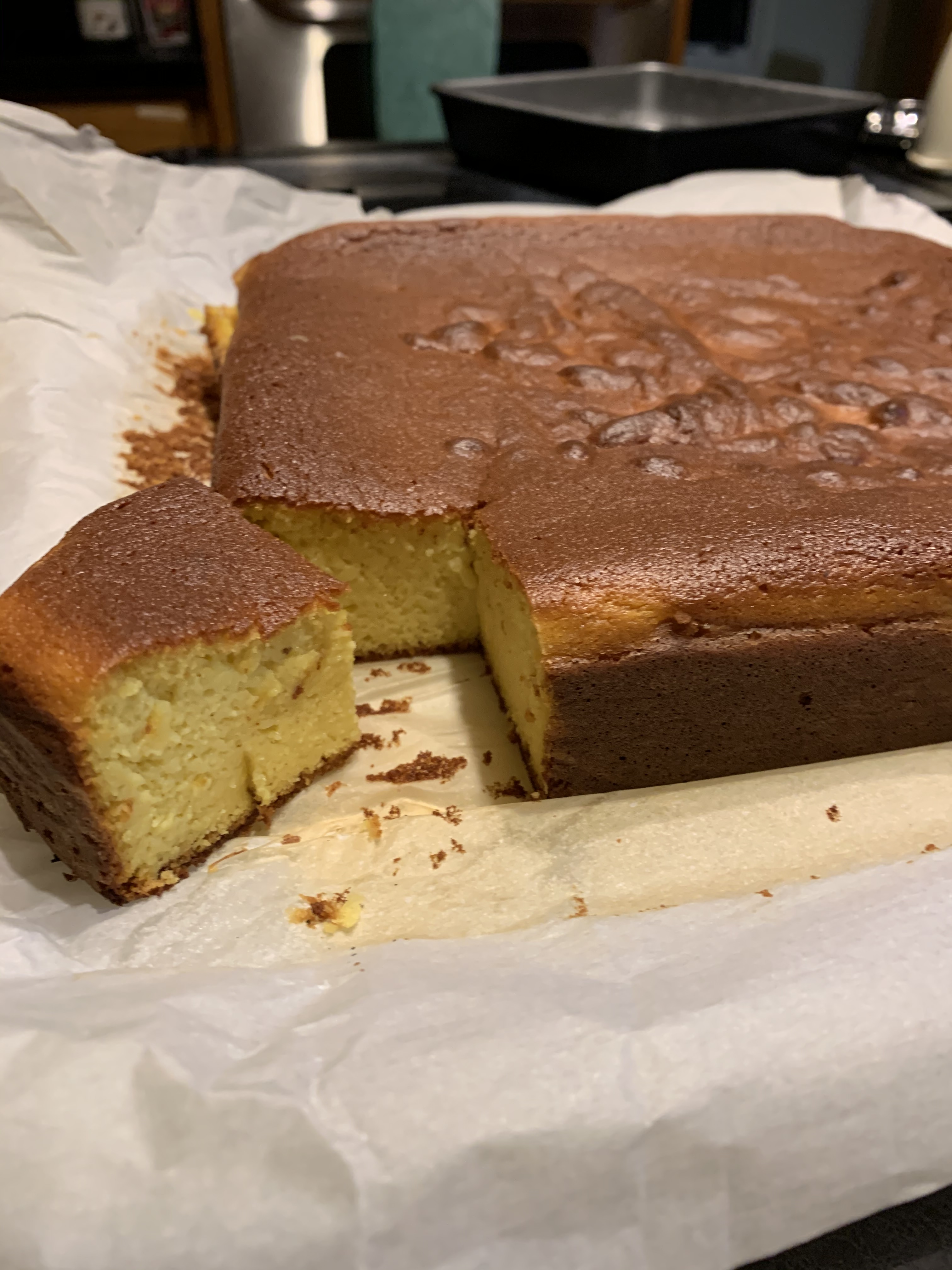
I’m naturally attracted to any recipe that starts with boiling 2 oranges for 2 hours and then blitzting them skin, pith and all. My catnip is everyday ingredients used in unusual ways. This Claudia Rogen cake is a famous cake- it routinely makes the lists of world’s best cakes and I think that is partly due to the ingredients and partly due to the texture of the final cake. This cake has a very delicate but dense sponge- the almond flour becomes drier and more “orangey” the next day. I generally serve it with whipped cream mixed with a tbsp of orange zest.
Start by boiling 2 clean oranges for 2 hours or as I did pressure cook the 2 oranges for 40 minutes. The pectin becomes all gelatinous then- think marmalade. Cool oranges- cut down the center- remove seeds and blitz to a fine puree.
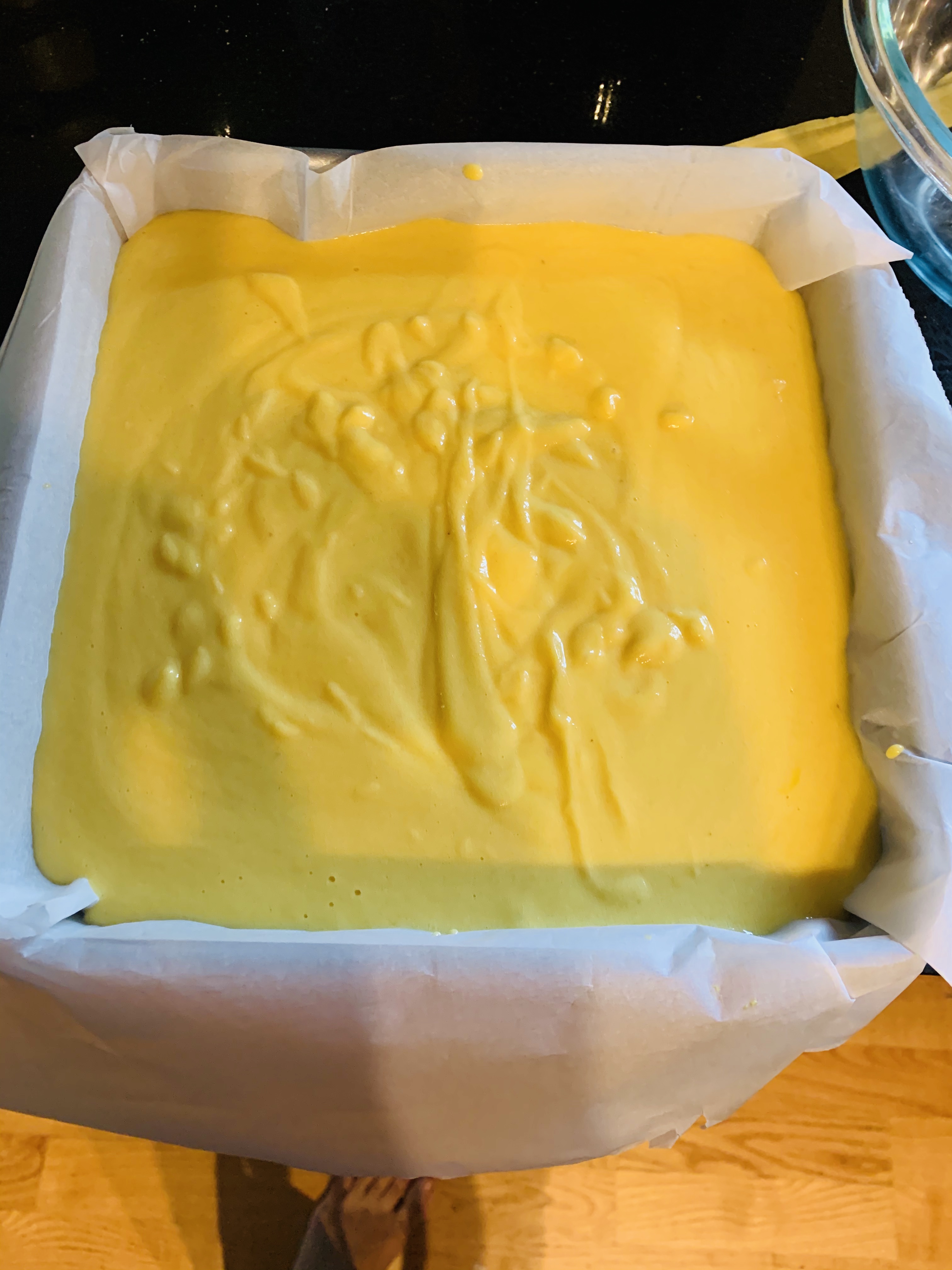
Next- heat oven to 375F. Prep a 9 inch pan- the recipe suggests a round pan with a springiform bottom, I used a 9×9 inch square pan and lots of parchment. This is a delicate cake- prepping the pan is essential. In a large bowl- whisk 6 large eggs with 250g sugar till the sugar is all dissolved (I used my stand mixer and it took about 4 minutes on medium). Add 250 g of almond flour and 1 tsp of baking powder. Mix well till mixture is homogenous. Add orange puree and pour the mixture (it will be fairly liquid) into the prepared pan. Bake at 375F for 45 minutes and start testing till a skewer comes out clean. It took 55 minutes in my oven. Let cool in pan for 10 minutes and then remove and cool on rack.
Serve with berries, cream, candied oranges – think of it as a pudding rather than a cake. It makes for an unusual end to a dinner party and it is delicious.
There is a misconception that Indian food is tedious and takes forever to make. This is not true- Indians cook quick food all the time at home. This is my standard dal – to be served with rice and a vegetable side or raita. A quick healthy protein rich dinner.
Pressure cook 1/2 cup of toor dal for 10 minutes in 3 cups of water till the dal is soft.
Make the tadka- in 1 tbsp of oil, add 1/2 tsp of jeera (cumin) seeds, when they sputter, add in quick succession- a pinch of asafetida, 1/2 tsp of turmeric, 1/2 tsp of red chilli powder and 3-5 torn kadipatta leaves.
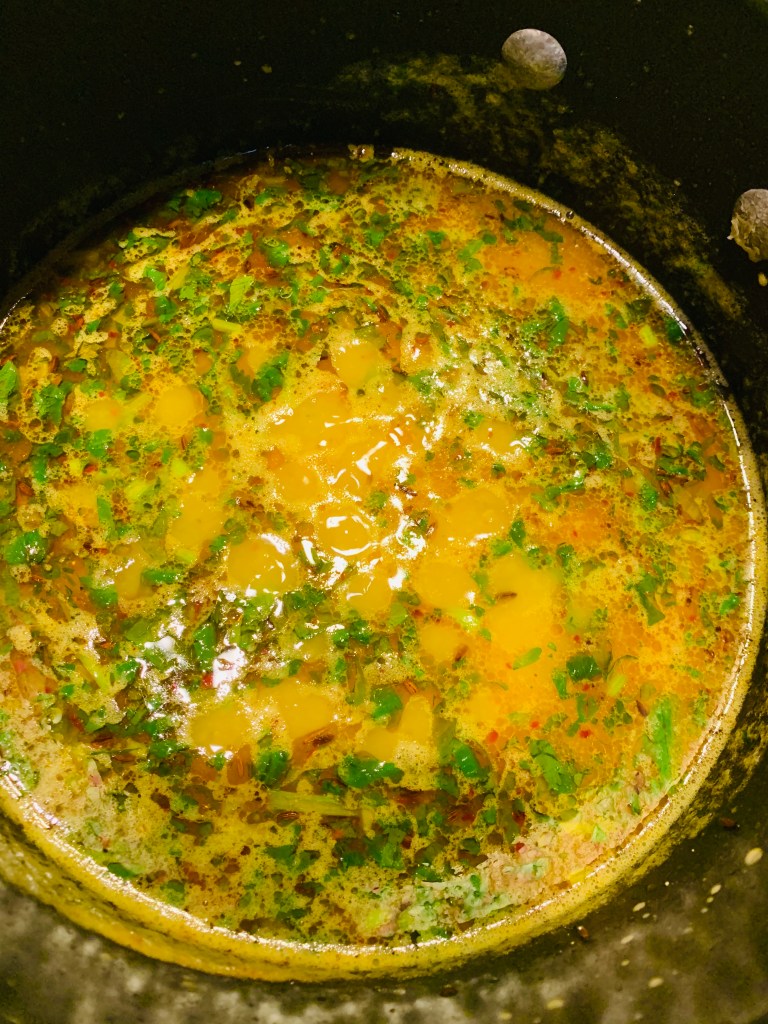
Add dal and about a cup or so of water- less if you like it thick. The Marathi Amti (dal) is thinner than north indian dals. Add cilantro (about 2-3 tbsp chopped) and maybe one jalapeno and salt (about 1/2 tsp). Simmer for 10 minutes. Top with ghee just before serving if you wish.
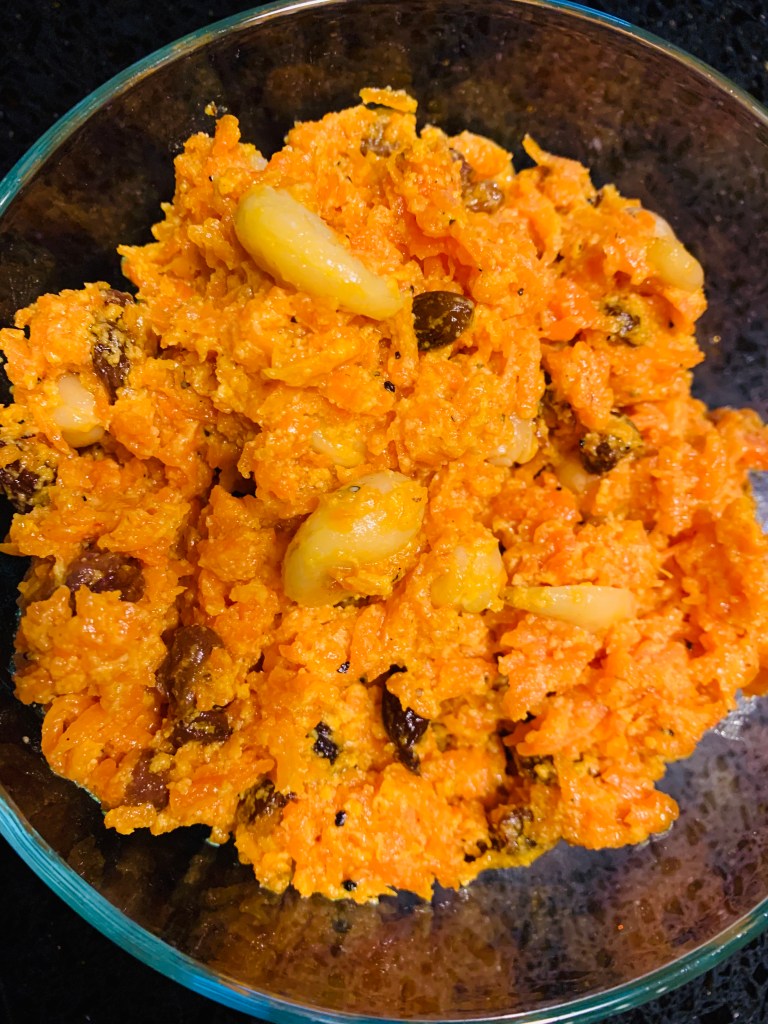
Gajar ka halwa is a stovetop carrot pudding- a special occasion food. Is it your birthday? Did you do well on your exams? Is someone getting married? Is it Diwali? It is a beloved celebration food. The traditional route involves using khoya (milk solids) and boiling milk down and takes a while. This is my easier cheat using condensed milk.
Peel and grate carrots (medium grate)- I used around 650 g of grated carrots (if you have more carrots- add some sugar, if you have less carrots- your halwa may be a little sweeter). Add to large pot with 1 stick of butter. Cook for 10-15 minutes on medium till bubbling merrily. Add one 14 oz can of condensed milk, a handful of cashews, a handful of raisins, 1/2 tsp of cadamom powder and a pinch of crushed saffron. Cook on low for 20-30 minutes or so and you are done.
Eat it hot, eat it cold – delicious every which way. The flavor deepens over a day or two- if it lasts that long.











 Delhi Girl Meets Food